NSW construction pipeline surges on data centres

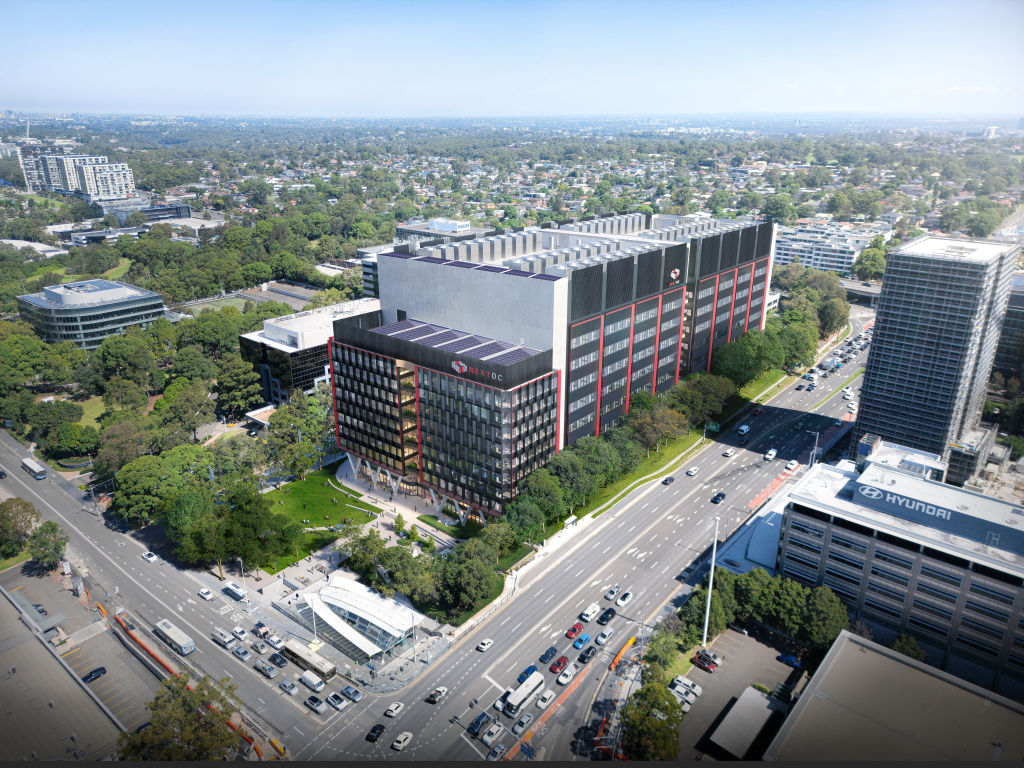
Data centre construction is driving a pick-up in commercial construction that has pushed the NSW pipeline to nearly $42 billion in the September quarter, its highest level in a year-and-a-half and almost twice the pipeline of Queensland, the next-busiest state, new industry figures show.
The value of NSW projects in concept or design-and-documentation soared 48 per cent from $28.1 billion in June, driven by data centres, large-scale precincts combining assets such as residential and commercial space, and hospitality.
“NSW has become the country’s digital-infrastructure engine room, and its deferral and abandonment rates remain more stable than other major states – giving proponents greater certainty as projects move from concept into structured planning,” said Ashleigh Porter, APAC president of data company Hubexo, which compiled the numbers.
New projects entering the pipeline – of projects that have yet to start construction – include a $5 billion, 400,000-square-metre, six-building data centre project in Kemps Creek for investor ISPT with no confirmed start date and a $2.2 billion, 50,233-square-metre, three-building data centre in Glendenning for an undisclosed client, due to start construction in the March quarter of 2027, Hubexo figures show.
Spending on data centres to support the growing demand for AI, accounted for 0.5 percentage points of the 2.9 per cent gain in business investment in the third quarter – well above the 0.4 per cent average over the past three years – and helped drive total economic growth at its fastest annual rate in over two years, official figures on Wednesday showed.
But the improvement, which also lifted Queensland’s pipeline to $23.4 billion, the highest in over a year, didn’t indicate a massive boom, Porter said.
Rather, the numbers reflected developers dusting off projects they had earlier planned but had shelved at a time of rising costs and uncertainty about the construction outlook, she said.
“The real turn in the development pipeline is work coming back on stream that was stalled or deferred,” she said.
Besides data centres, mixed-use precinct developments, such as Brisbane’s $3.44 billion Victoria Park masterplan – the 2032 Olympics venue that will include a future Brisbane Stadium, National Aquatic Centre, and Brisbane Athlete Village – are also driving development.
Consultancy Arup was appointed principal contractor to develop the 64-hectare site’s masterplan in September.
Hospitality projects, including the $2 billion Novotel and Ibis Hotels developments in Sydney’s Darling Harbour and energy projects such as the proposed $1.6 billion Bendenine Wind Farm in the NSW Southern Highlands and Vestas’ $2.5 billion Abercrombie Wind Farm in western NSW, are driving work.
An increased willingness by clients to share risk with contractors was helping get projects started and using fewer fixed-price contracts that left all the risk with a contractor and opting for greater levels of partnership, Porter said.
“There’s a shift in how builders are working with developers,” she said.
“Builders are getting in earlier. They’re coming in in the concept and feasibility stages, influencing decisions on how they can roll out. That’s stabilising projects as they move through the pipeline.”
While the pipeline was rebounding in NSW and Queensland, Victoria had yet to show the same improvement, according to the Hubexo Construction Outlook report.
The southern state’s pipeline increased to $7 billion in the September quarter from $4 billion in June but was still one-third of its recent $23.7 billion peak in June last year.
“Victoria hasn’t been as forthcoming with changes in the planning approval process,” Porter said. “There’s lots of red tape and hoops.”
Residential development, which increased late in 2025, is due to strengthen next year, the report says.
That can be seen in Gold Coast, where developer Aniko Group, in June said it would fast-track construction of the 168-apartment second tower in a four-tower residential project. It will shortly start selling apartments with a starting price of almost $1.4 million.
“We’re seeing strong confidence from local, interstate and international buyers,” Aniko managing director George Mastrocostas said.
“Momentum is everything in today’s market, and we are well-positioned to carry this forward into the Christmas and New Year period as we launch stage two.”