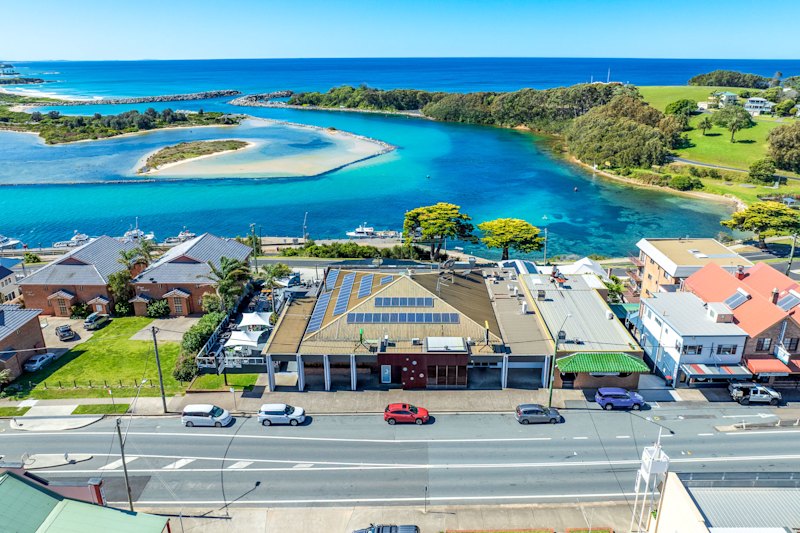
The future-proof $400 million NewCold freezer that feeds the AFL grand final
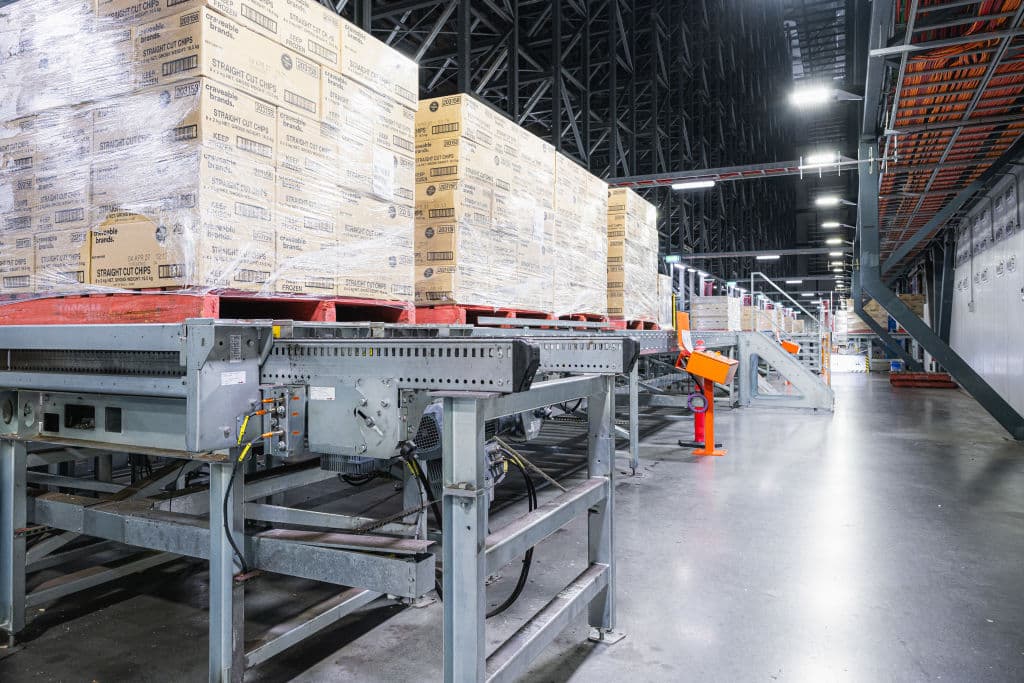
The hot chips and pies that will be sold to the AFL grand final crowd of 100,000 at the MCG are already in Melbourne’s west, stacked 40 metres high in the dark and at minus 23 degrees in a building no one is permitted to stay inside.
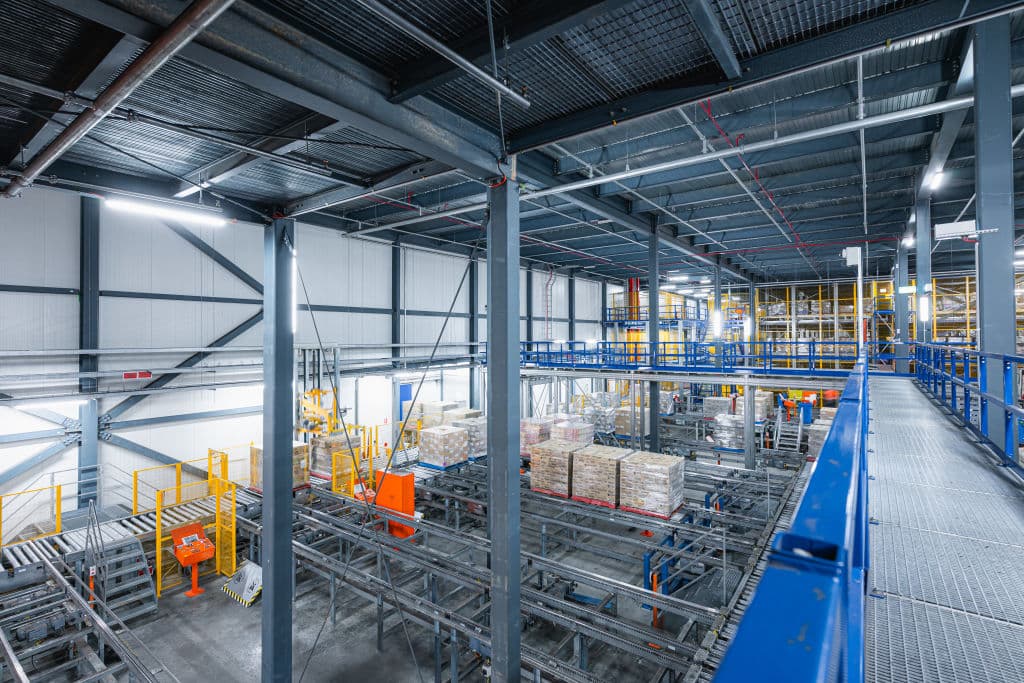
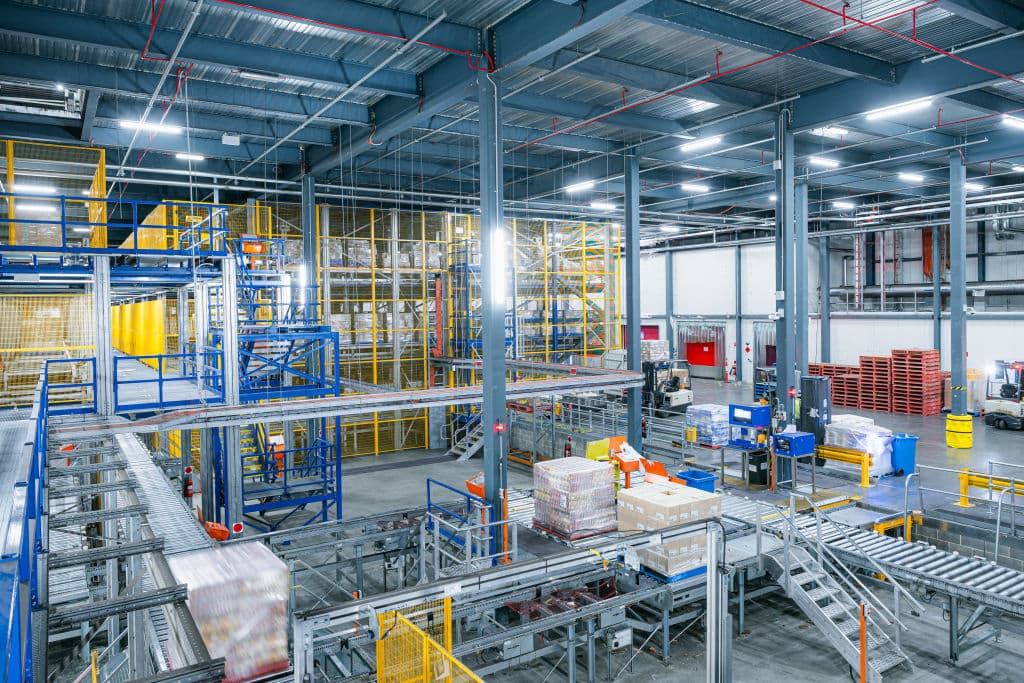
No wayward forklifts hum down the aisles at the Truganina site, about a 30-minute drive west of Melbourne’s CBD. No pickers in beanies and high-vis. Just automated stacker cranes, satellites and conveyors shifting pallets through a super sub-zero, low-oxygen void bossed by software.
Today, Dutch cold-chain group NewCold officially opened the $220 million freezer extension that takes its Melbourne I facility to 182,000 pallet positions, a total of 407,000 across its two freezers. This makes it the largest automated cold storage in the country and, functionally, the pantry for Australian Rules Football.
NewCold founder and chief executive Bram Hage flew in from the Netherlands for the occasion, nine years after the company bought its first slice of rezoned paddock on the city’s western fringe.
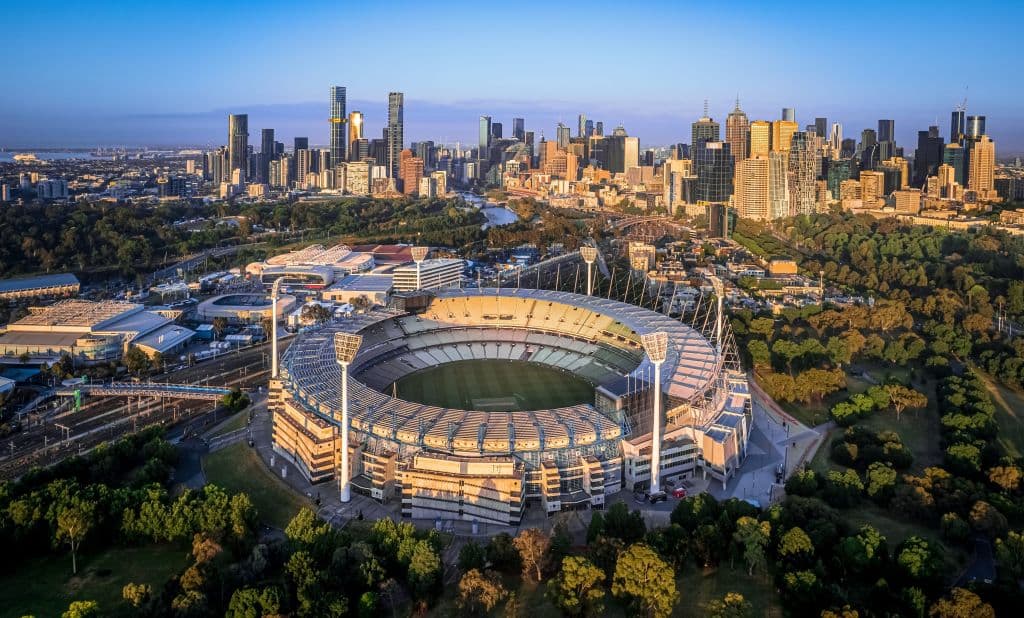
From rezoned paddock to $400m logistics asset
NewCold bought two parcels of freshly rezoned farmland in 2016 from a local family, but it took a bit of convincing.
The Agar family had owned it for generations, buying it as agricultural land before having it rezoned industrial. NewCold was the first party through the gate.
The company eventually acquired 24 hectares at $129 a square metre, an outlay of $31 million, and has since put around $400 million worth of buildings – Melbourne I and Melbourne II – on top of it.
“The Agar family owned the land for decades,” Hage says. “We were the first buyers, in 2016. There was nothing standing on it.”
Getting the family to part with it took more than a price. When Hage first approached them about putting a freezer on the paddock, the Agars were unconvinced – enough that they flew to the Netherlands to see what a NewCold facility actually looked like before they would agree to sell. They came home and gave their blessing.
Hage counts them as friends nine years later, and the freezer’s address, 19-23 Agar Drive, still carries the family name.

130,000 pallets of fries, pies and ice cream
Official match-day sales at last year’s AFL grand final included 24,000 serves of hot chips and 12,000 pies, and experts expect consumption to remain stable this year.
Ask Hage what is in the building, and the answer reads like the menu at a footy ground. Of Melbourne I’s 182,000 pallet positions, he estimates 120,000 to 130,000 hold fries and pies, with ice cream accounting for much of the balance.
Ask him how much floor space that occupies and you get a corrected unit of measurement.
“We don’t often measure in square metres,” he says. “In total, it’s 182,000 pallets, and it’s 40 metres high.”
The freezer covers 10,453 square metres across frozen, chilled and ambient storage, and is one of the world’s largest automated high-bay cold-storage facilities.
The food giants behind the freezer
Three food manufacturers underwrite the building. McCain and Patties are the anchors on the frozen side, and the site is the national distribution point for Peters, one of the two customers NewCold started with when it entered Australia in 2017 – a relationship that has since made McCain its largest customer worldwide.
McCain alone accounts for 70,000 to 75,000 pallet positions. McCain’s regional vice-president of supply chain, Ross Fallon, equates that to around 35 million kilograms of fries – and that strips out the frozen pizzas and ready meals also stored on site.
For the tenants, the extra space buys certainty as much as volume.
“For a business supplying frozen products across Australia, maintaining temperature and having product where it needs to be, when it needs to be there, is critical,” says Peters Ice Cream chief executive Emma-Jane Collins. “The additional capacity gives us greater ability to support growing demand.”
The products sit there for anywhere from two to a maximum of four weeks before they move out to supermarket distribution centres, north to Sydney, or into the food-service channel that supplies stadiums and major venues around the country, including the MCG.
Stadium stock doesn’t travel directly from Truganina. NewCold’s regional managing director for Australia and New Zealand, Karthi Kartigeyan, explains that PFD Foods, the country’s largest food-service distributor, takes it in bulk and runs daily deliveries to the ground for each particular game.
And the football volumes are less a grand final spike than a six-month plateau.
“The footy season is full of pies,” Kartigeyan says. “Not just the grand final.”
The 30-minute chip
The chips sold at the MCG are not the ones in the supermarket freezer.
The stadium variety is Surecrisp, McCain’s flagship out-of-home product, engineered around a single constraint: the walk back to your seat.
“There’s technology that goes into the batter that’s on the chip, and that allows it to stay crispy for 30 minutes, which is perfect for a venue like the MCG, where you’ve got mass consumption and people need to move through the facility,” Fallon says.
It is, he says, the number one out-of-home battered chip in Australia. For anyone recreating the day on the couch, the retail equivalent is McCain Pub Style.
“Everyone loves sharing fries,” Fallon says. “When you’re at the pub, if you get a bowl of fries, everybody’s in there trying to steal your chips.”
That in-home question is no longer a footnote for the industry. Cost-of-living pressure is pulling consumption out of pubs, clubs and restaurants and back into kitchens, and the air fryer has quietly raised the ceiling on what a home cook can produce.
“As the cost of living continues to bite, the luxury of people being able to eat out, to go to their favourite restaurant, pub or club [is lessening, and] we’re seeing people heading out less,” Fallon says. “What the air fryer has given is the ability for someone to have a restaurant-quality experience with a crispy fry, because everybody needs a crispy fry.”
Overall hot chip consumption is still growing, he says. It is just moving indoors. CSIRO forecasts Australian consumption of prepared and frozen packaged meals will reach $3.7 billion by 2030.

Why humans barely enter the building
What makes a building like this work is the near-total absence of people, and Fallon has spent his career chasing exactly that. His guiding principle is one word: touchless.
“Every time you touch a box or a pallet of goods, you’re adding cost,” he says.
At McCain’s Ballarat factory, pallets are built by robots and pushed by rollers straight onto trucks run by NewCold’s own freight arm, the former Karras Cold Logistics, bought in 2023.
Loading a trailer takes about two minutes, compared with up to half an hour by hand. The load travels for an hour and 15 minutes down to Truganina, is automatically unloaded in another two minutes and disappears into the high bay – digitally checked in on arrival, scanned, weighed and condition-checked, carried by conveyor to a stacker crane, then slid into the racking by a satellite.
Anything too heavy, too tall or slightly overhanging is rejected before it gets in. Overnight, the system reshuffles stock so the next day’s orders are already in position.
Coming out, the sequence runs in reverse and ends in buffer lanes, already ordered for the truck that’s coming.
“The last five to six metres, we load the trucks manually,” Hage says. “That’s the first time a person touches the pallet.”
Both men arrive at the same number from opposite ends of the chain. “From Ballarat all the way to the customer’s vehicle, it’s six metres that a human has to touch the pallet,” Fallon says. “It’s more than just the four walls of their facility – it goes all the way back into our factory.”
The environment explains much of the automation. The new freezer runs at minus 23 degrees and at deliberately reduced oxygen levels for fire suppression in a building where sprinklers would simply freeze solid.
“Fire needs oxygen to ignite, so it’s a low-oxygen environment,” Fallon says. “The only humans in there for any length of time are engineers and maintenance, working to tight regulations and wearing breathing apparatus as required.”
Everyone else gets 10 or 15 minutes in a jacket, and then it is time to leave. The building is watched instead from a control room, where staff track every pallet on banks of screens.
“People often think automation is just about speed, but it’s also about protecting the product,” Hage says. “Once a pallet enters the high-bay, the system does almost everything itself.”
The tenant commitment that unlocked the extension
McCain initially signed up as the anchor tenant on the original building, on a 10-year agreement, while the rest of its Victorian frozen inventory sat across a spread of conventional manual warehouses run by other providers.

Around four years ago, the two companies began talking about consolidation. McCain wanted automation across its entire storage requirement, and NewCold wanted a reason to expand.
“Through lengthy discussions, contract negotiations, and finally a commitment from McCain to bring all of our storage requirements over to NewCold, they were able to make the investment for the extension,” Fallon says.
That commitment lifted McCain’s on-site footprint to 70,000-odd pallet positions and gave NewCold the covenant it needed to fund the freezer.
What has gone up is not a second shed but a taller continuation of the first, stitched into it internally. The original stood at 35 metres; the new section clears 40 metres.
“It’s an extension of the Melbourne I facility, a little bit higher, and all internally connected to each other,” Hage says. “Every pallet can go from one to the other with internal material handling equipment, so we run it as one facility.”
The new freezer covers 10,453 square metres and works through 21 loading docks. The same throughput in a conventional manual warehouse would sprawl across several times the land.
A 407,000-pallet cold-storage precinct
Truganina is now a precinct rather than a building. Melbourne II sits 700 metres away, has completed an expansion of its own, and is the larger of the two at 225,000 pallet positions. Between them, the buildings hold 407,000 pallet positions across frozen, chilled and ambient storage, with Melbourne II running five temperature zones – a structure that lets it hold a dairy tenant and a frozen-vegetable tenant under one roof.
Kartigeyan says Simplot’s chips and vegetables occupy about 50,000 pallets, and chilled-dairy group Lactalis Mainland has about 95,000. A 100,000-pallet facility in Sydney opens within the month.
“In total, NewCold has invested in over half a million pallet spaces in Australia, between the two cities,” Kartigeyan says. Other Australian capitals and New Zealand are being assessed, though he is candid that these are slow assets to bring out of the ground: “Obviously, our development time is long.”
The power challenge behind modern cold storage
The capacity has landed in a market that spent several years not building any. Investment in cold storage slowed sharply during and immediately after the COVID pandemic while demand kept climbing, pushing costs up – a squeeze Fallon says was felt more acutely in Sydney than Melbourne.
“Demand for cold storage space was outpacing supply,” he says. “You had this three to four years where infrastructure and new builds had significantly slowed down.”
NewCold kept its Melbourne and Sydney timelines on track, and had the advantage of never having stopped. For an occupier, the appeal of automating into that market is as much about predictability as price: “Automation provides a more cost-efficient supply chain to ensure that the costs are known and controllable.”

For an occupier of this kind, a grid connection is an essential asset. A 40-metre freezer at minus 23 degrees is a substantial and permanent electrical load, and Melbourne’s west has become contested ground, with data centres competing hard for the same capacity. NewCold’s connection predates the competition.
“We have had the connection for a decade,” Hage says. “Nowadays it would probably be a little harder to get the same connection.”
Melbourne I also has its own high-voltage installation. “We are in control of our power,” Kartigeyan says. The bills, he concedes, are “significant”.
Cold storage is incredibly energy intensive, Hage says. “By going higher and storing more product within a smaller refrigerated footprint, we can use around 50 per cent less energy than a conventional cold store.”
Solar is going on both sites, alongside combined heat and power plants, with the group targeting carbon neutral by 2040.
The man behind the freezer empire
Which leaves the question of who actually gets to watch the game all this food is destined for.
Not Fallon. McCain has a partnership with the MCG, but the hospitality goes to the customers who support the business. “I’m a Hawks supporter, so I’m hoping to get there on my own steam.”

Not Hage either. Having flown in from the Netherlands for the opening, he flies home on Sunday – a week before the siren.
There is an irony in that, though it turns on a different code.
According to an interview published last year, Hage was once a promising Saturday-league footballer in West Brabant – soccer, not the game his freezers now stock – and, during the week, a gardener, until a knee injury in the late 1980s ended both and a reintegration programme placed him in a logistics warehouse instead.
He founded his first computerised freezer-warehouse business at 33, lost control of it after the 2008 crisis took down its bank, and started again in 2012 with NewCold, now the world’s third-largest refrigerated logistics provider with 26 warehouses across three continents.
Nine years on from the paddock, he says the doubt was the opportunity.
“Nine years ago, there were people who questioned whether Australia needed the capacity we were building,” he says. “Today, we have more than 400,000 pallet positions across this precinct and we’re continuing to invest. That says a lot about how the market and our customers have grown.”