Luxury airport retail redefining destination shopping
There was a time when a holiday officially started when the first pina colada was poured. The rise of luxury shopping at Australian airports has moved that moment to the departure terminal.
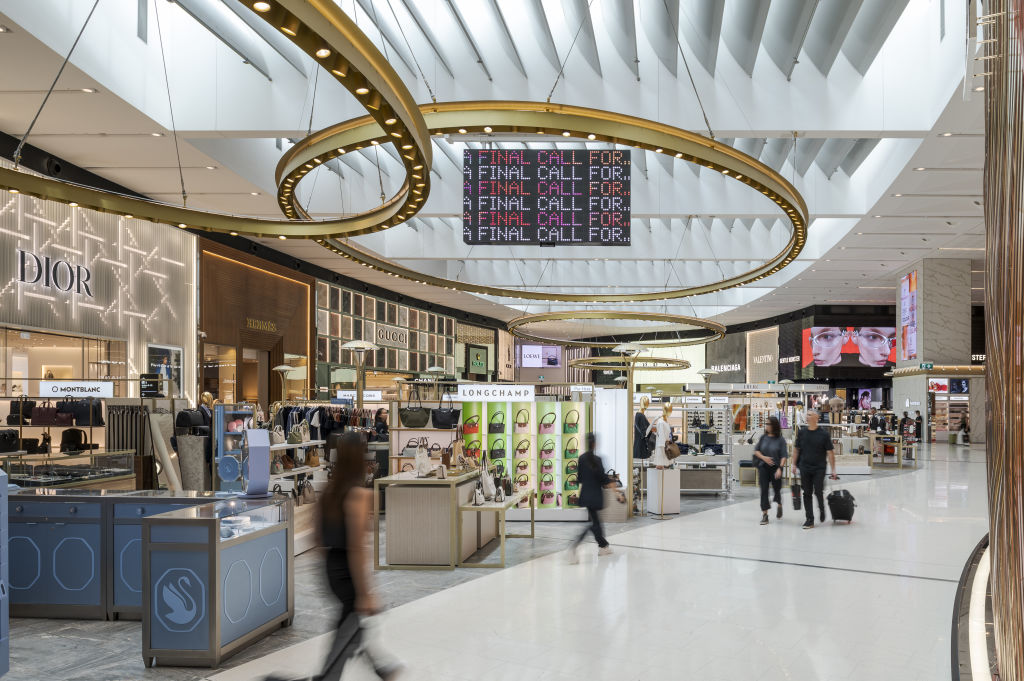
Quaffing champagne at Icebergs Bar and browsing beautiful fashion boutiques sounds like a day out at Bondi Beach, but it’s all within Sydney Airport, and marketing experts say Aussie airport retail and hospitality is set to get more exclusive and enticing.
Nicole Reaney, chief executive and founder of InsideOut PR, says airports are no longer just transit hubs – they are luxury retail destinations with a uniquely captive audience.
Brands recognise that passengers have more spare time and fewer distractions than customers in other settings. “Within the airport context, you’ve got an emotionally shopper-ready, captive market,” says Reaney, a brand commentator.
“Travellers’ emotions are high, there’s a desire to treat themselves, and they have the luxury of time to browse. You also capture travellers who are ready to impulse buy. They’re ready to spend their dollars and begin their holiday.
“It used to be that the shopping happened on the arrival back into your country, but now it’s setting the scene for the holiday from the moment you depart.”
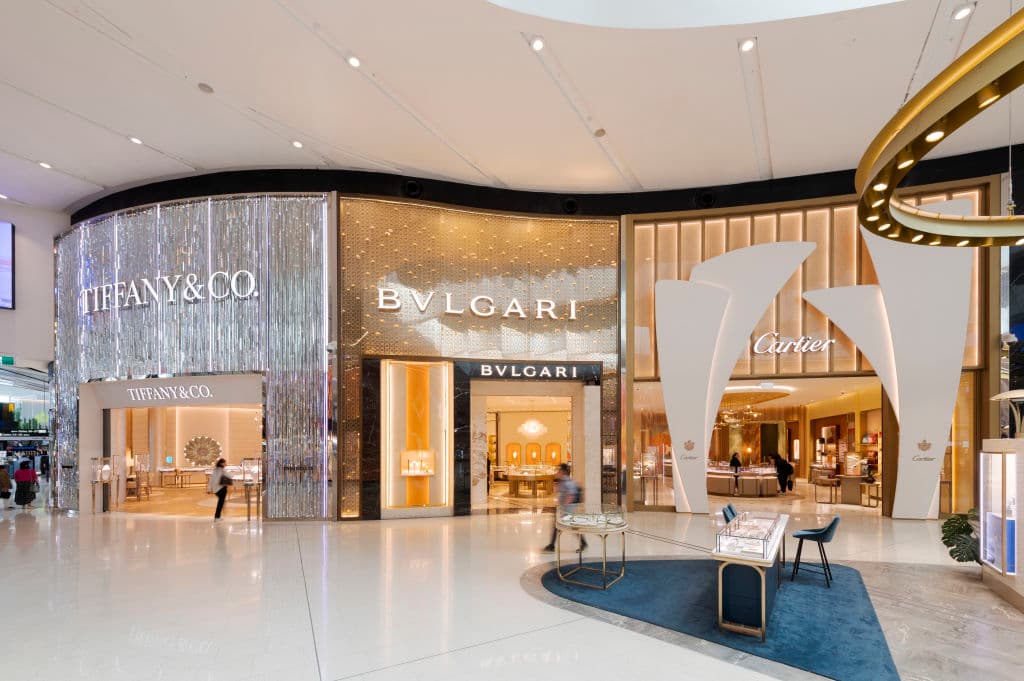
Brands also understand the power of the social-media mindset. “Travellers are also social-media centric, and ready to take photos, so retailers can create Instagram-worthy backdrops that promote the brand to peers and influencers,” Reaney says.
Retail at Sydney Airport, which includes duty-free shopping, luxury boutiques, restaurants, cafes and bars, accounted for 19 per cent of the airport’s revenue two years ago, according to its 2024 annual report.
Fourteen new food and beverage outlets anchor the airport’s redevelopment of Terminal 3. This includes Icebergs Bar + Kitchen, which mirrors the chic style and menu of its flagship Bondi venue – one of Australia’s best-known restaurants. Forget a food court sandwich when you can have a bowl of spaghetti vongole with Goolwa pipis.
Melbourne Airport’s $10 billion expansion will include Elite Park, a 32-hectare precinct with major retailers, hospitality and entertainment. Works will unfold over nine years, and the first tenants are expected to move in at the end of this year.
Australians took 11.5 million overseas trips in 2024, Roy Morgan data shows. Despite a cost-of-living crunch, pleasures such as holidays remain on the agenda. A person who hesitates over buying a second cup of takeaway coffee at work may not think twice about buying a wallet at a Celine boutique before boarding a flight for a long-awaited holiday.
“We’re experiencing a dichotomy of spending,” Reaney says. “On the one hand, people are very conscious of bills and cutting daily indulgences, but they’re saving their money and holding it for luxuries they can invest in longer term.”
Sharon Williams, founder and chief executive of Taurus Marketing, says luxury brands recognise airports as the perfect testing ground for new items. For example, Louis Vuitton has been known to launch travel products in its airport boutiques before rolling them out in other stores, she says.
“Rather than opening an expensive 12, 24, 36-month lease in a high street, brands can trial with transient customers,” Williams says. “You have a larger audience coming past than road traffic at a retail store. You’ve got two or three hours of hanging around – it is the ideal time and place. A perfect emotional tone. A captured market.”
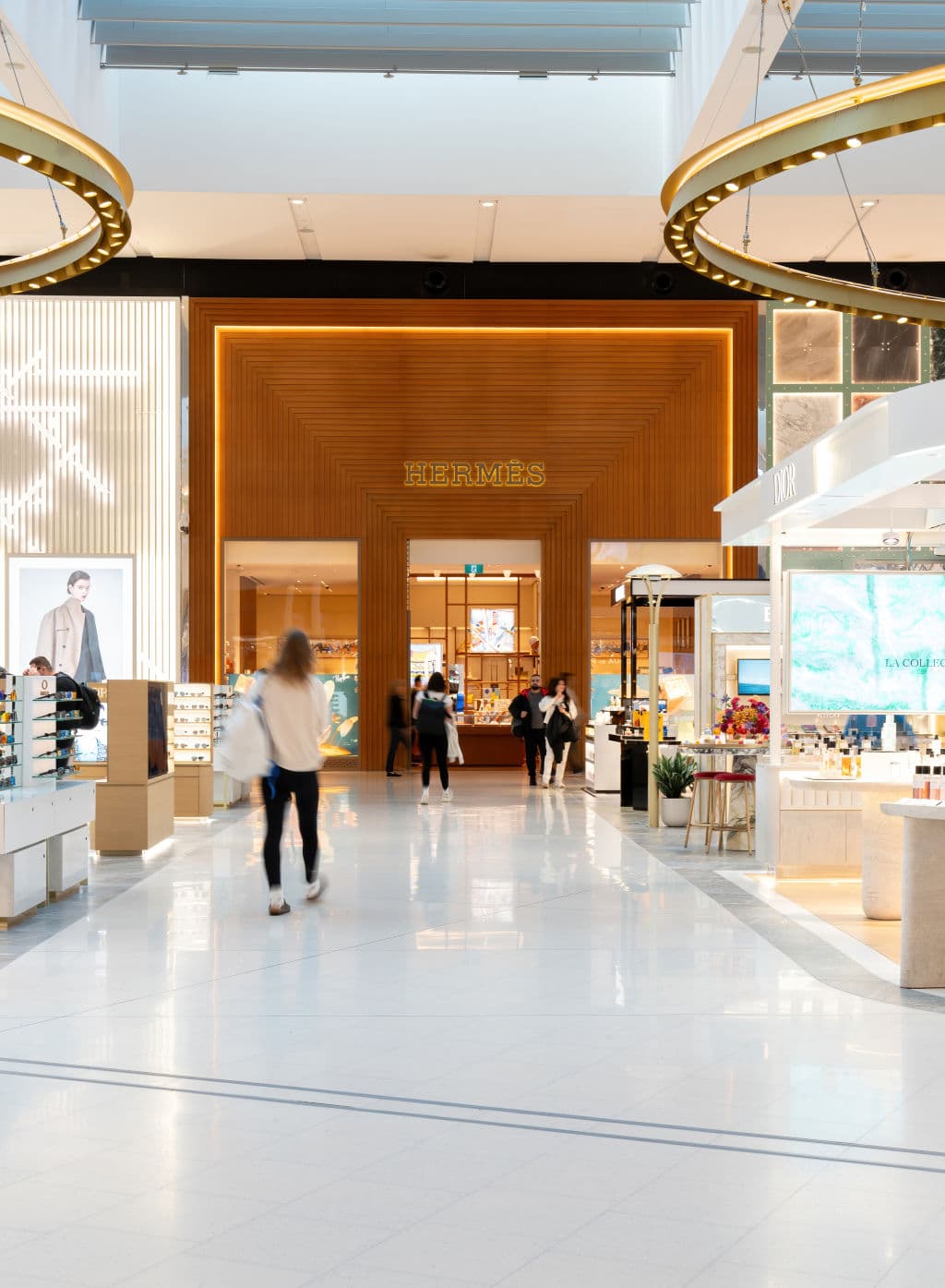
While airport shopping was once geared towards convenience, such as magazines or neck pillows, now seasoned travellers gravitate to Gucci, Cartier, Louis Vuitton and Hermes, she says. Younger, in-the-know passengers are buying “mirco-luxuries” from brands such as Gentle Monster and Loewe.
High-end brands curate and customise their airport boutiques by offering exclusive products and experiences that cannot be found at their other stores, Williams says.
Airport retail in Australia has growth potential. Williams says airports could become a primary shopping destination, where passengers can stock up on Christmas presents before collecting their luggage. “It’s a perfect storm of consumerism,” she adds.
Overseas airports have shown how far the concept can go. Passengers at Hong Kong International Airport can buy a product at a terminal shop and have it delivered to their home, avoiding customs delays and baggage weight limits, or to their hotel.
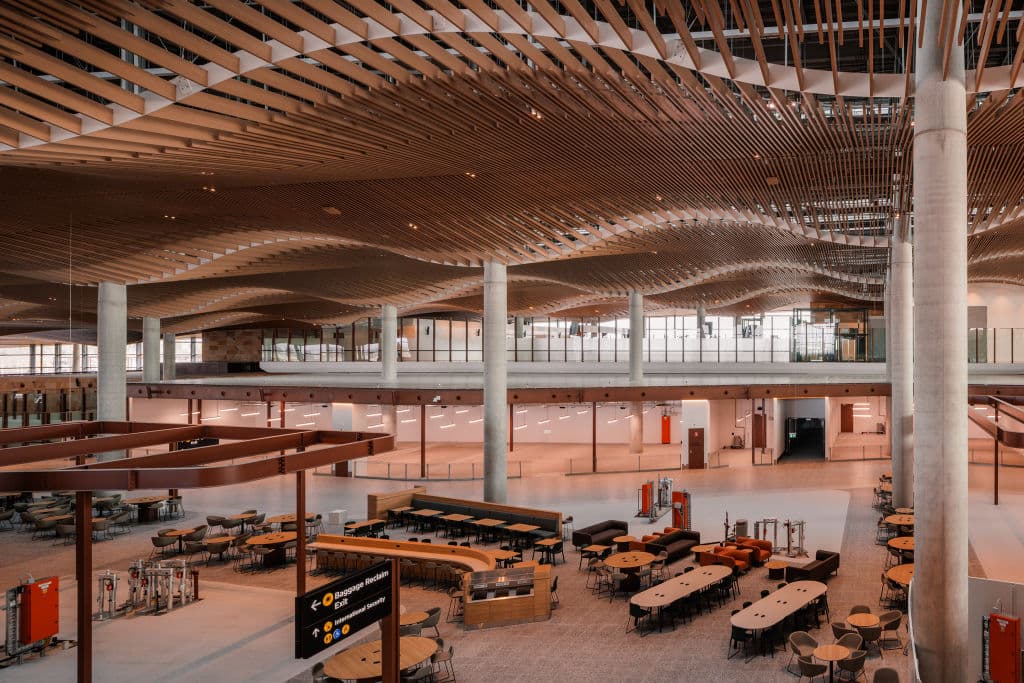
Fresh floor space is becoming available for brands that want a slice of holidaymakers’ spending. Western Sydney Airport will open in late 2026 and, by 2060, is expected to become Australia’s busiest airport, welcoming 82 million passengers annually. Airport management is inviting enquiries from potential retail partners.
“Sydney Airport has been innovative for a long time,” Williams says. “Hong Kong is extraordinary with pre-order and delivery, but Australia is strong, and Western Sydney Airport will be ‘wow’.”
Savvy brand managers are slotting airports into their omnichannel approach. “Today, you have a three-way strategy: airport retail, traditional bricks and mortar, and online,” Williams says.