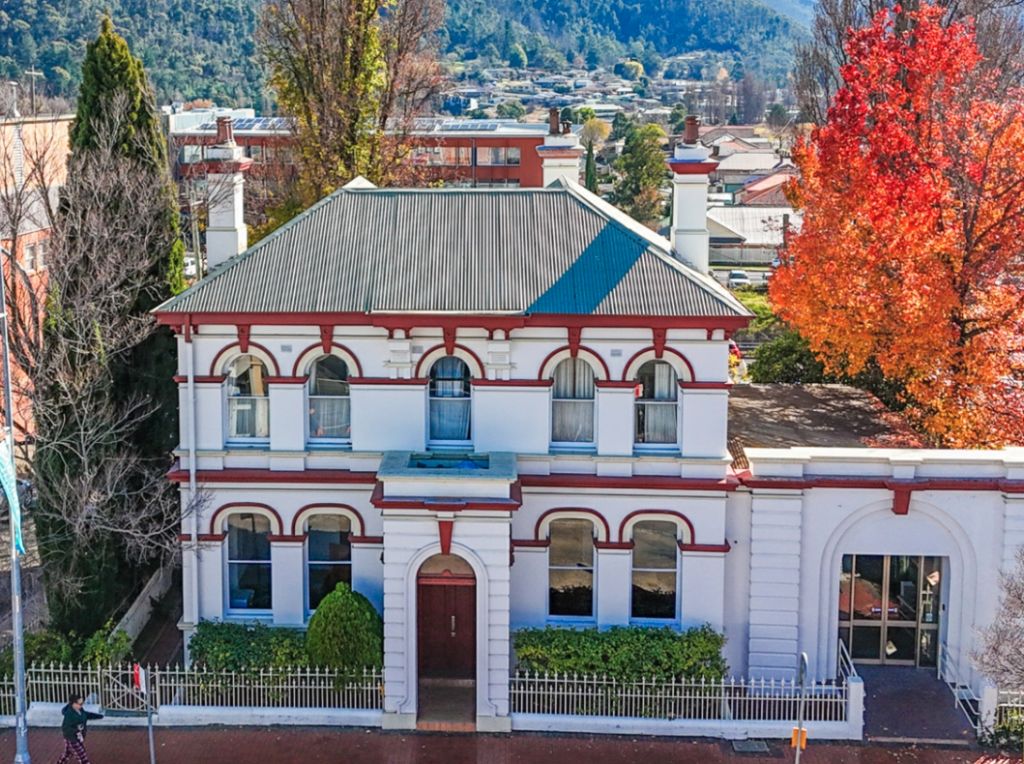
Historic former Lithgow bank building listed for $1.65 million
A grand former bank building on the edge of the Blue Mountains – complete with two original safes and an apartment generating rental income – remains on the market for $1.65 million.
Standing grandly at 156 Main Street in the historic mining town of Lithgow, the three-storey heritage-listed former National Australia Bank (NAB) building is poised for adaptive reuse with stunning original architectural features still throughout.
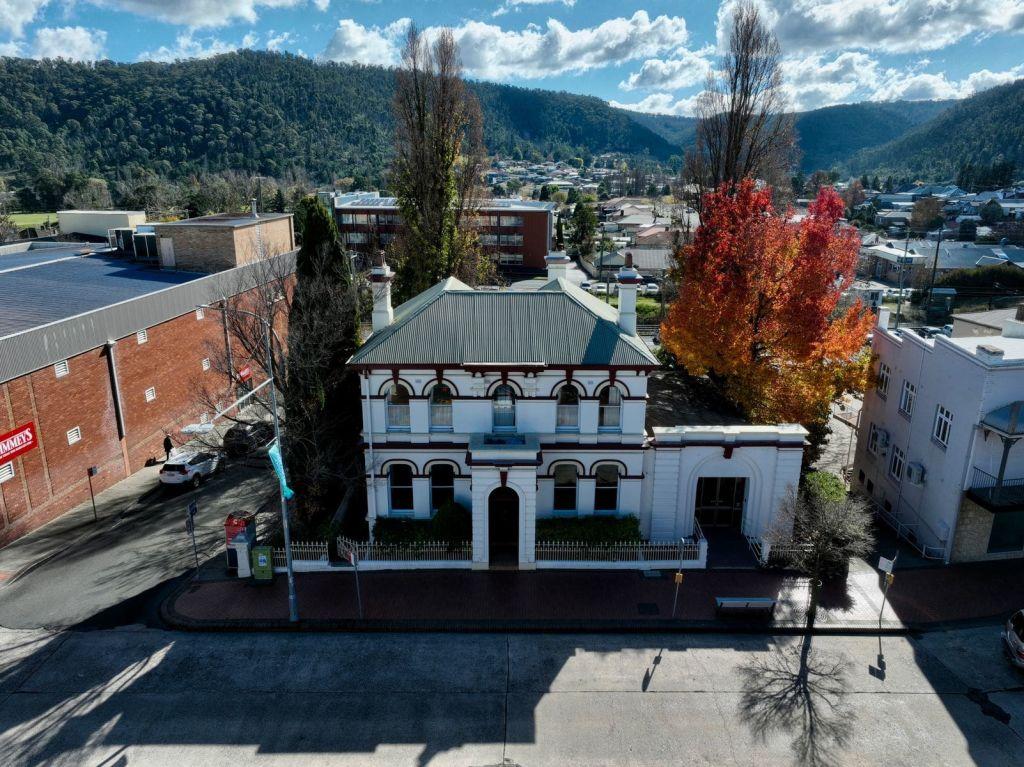
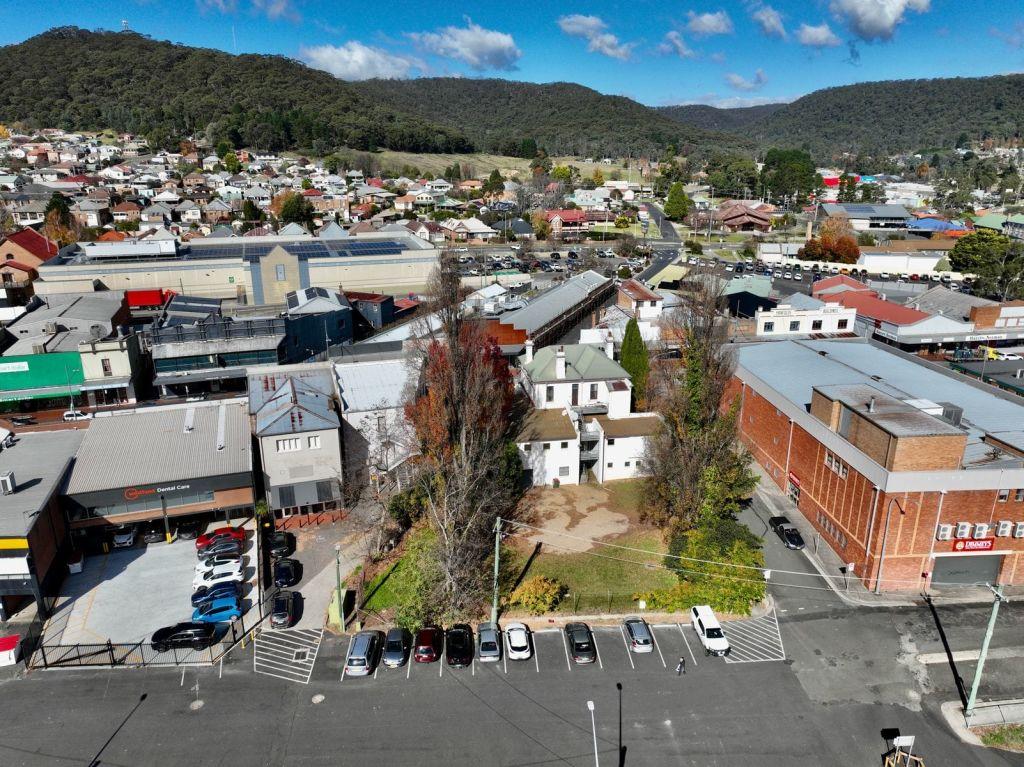
The building features a 396-square-metre floor area on a1230-square-metre site – with 24 metres of Main Street frontage – a prominent position in the regional city’s CBD, about two hours north-west of Sydney or an hour from the major commercial hub of Penrith.
In a valley known for its coal seams, Lithgow continues to attract Sydneysiders sick of the hustle and bustle – a place where you can still pick up a home for around $600,000 and easily take the train back to the city for work.
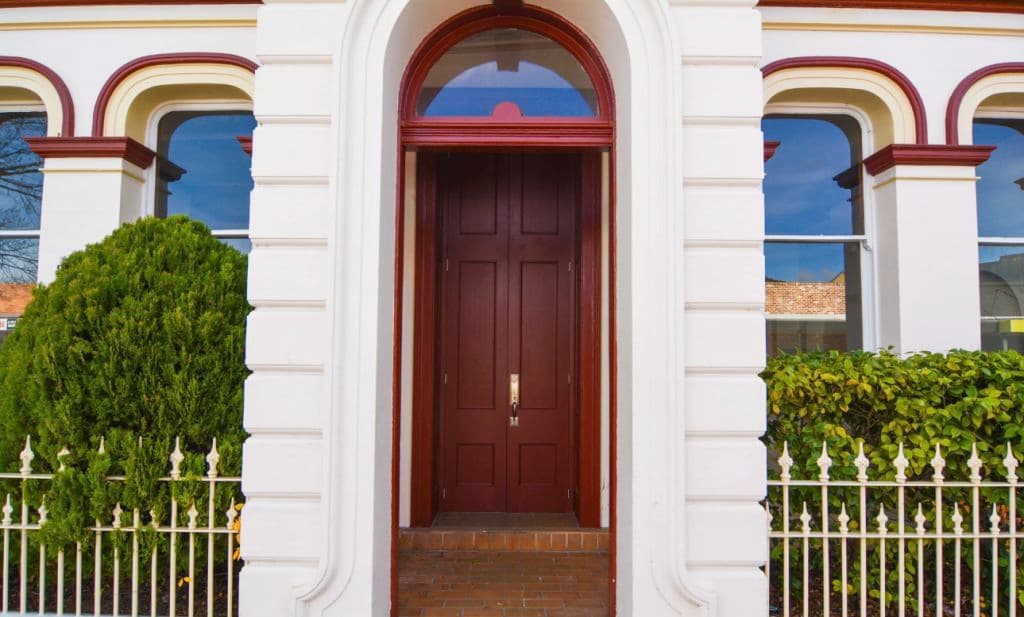
Banks were built in a style to project strength and trust, and this one is no exception, commanding a striking presence with its white and maroon shades in a Victorian-Italianate architectural style along the town’s main drag, which has seen recent government investment.
The unique property is co-listed for $1.65 million plus GST through Cabmon Property director Peter Seeto in partnership with LJ Hooker Lithgow principal Jamie Giokaris.
Lithgow residents could bank locally until the NAB branch, operating for 43 years until April 2024, controversially closed and even removed the ATM.
Initially offered to the market shortly after for $2.2 million, the vendors – a private couple who call the Blue Mountains home – adjusted price expectations around September last year.
The pair have held the asset for almost two decades, having acquired it as a clever set-and-forget commercial investment for $375,000 in 1998.
“It’s been a fantastic investment … it’s more than paid itself off,” Seeto said. “That’s why it’s a good idea to invest in commercial real estate.”
Adaptive reuse and features
The property was refurbished in 1990, but boasts original architectural features including soaring ornate plaster ceilings, timber finishes, the original bank teller counter, a secure strongroom and two original bank safes.
“The former National Australia Bank is a great opportunity for a brand looking to establish in Lithgow, whether you’re a professional service or hospitality business,” Seeto said.
“The property offers space and credibility with its beautiful architecture of yesteryear and prominence with its main street corner location.”
The ground floor, formerly the banking chamber, lends itself to a range of potential uses including retail, hospitality, professional rooms, offices or a gallery, subject to relevant approvals.
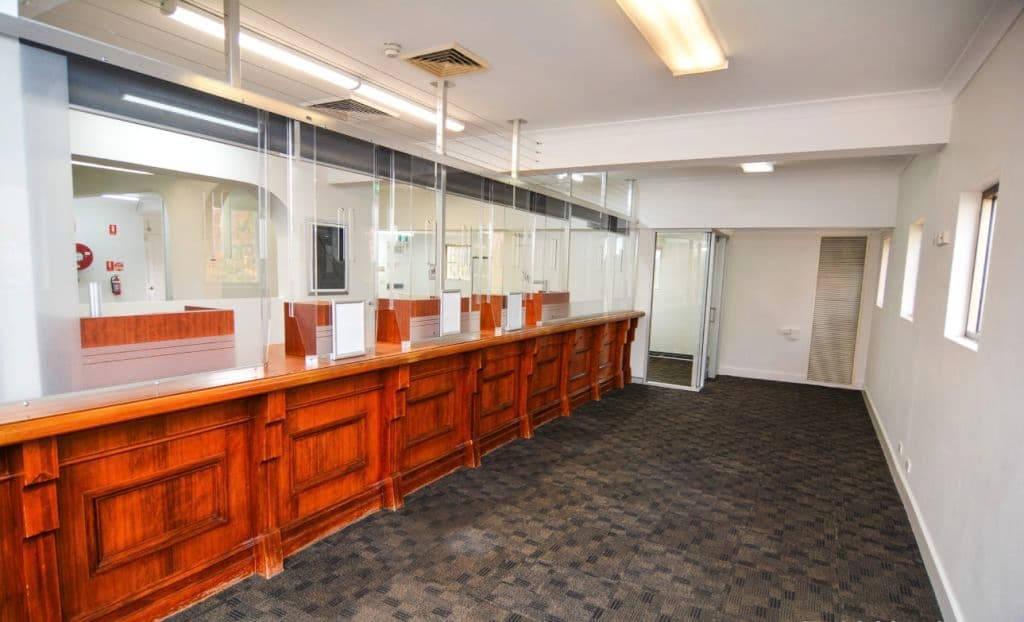
The lower-ground floor contains a large storage area, archive room, basement, staff amenities and a double garage accessed via a side laneway.
Upper-level rental income
Upstairs, a self-contained two-bedroom apartment with a separate entrance is currently leased fully-furnished at $400 a week under a six-month tenancy.
Seeto said the apartment offered an additional income stream while providing the flexibility to accommodate an owner, manager or workers based temporarily in the region.
“There’s a lot of need for short-stay accommodation in Lithgow, particularly for contractors who are coming in and working on these projects Monday to Friday,” he said.
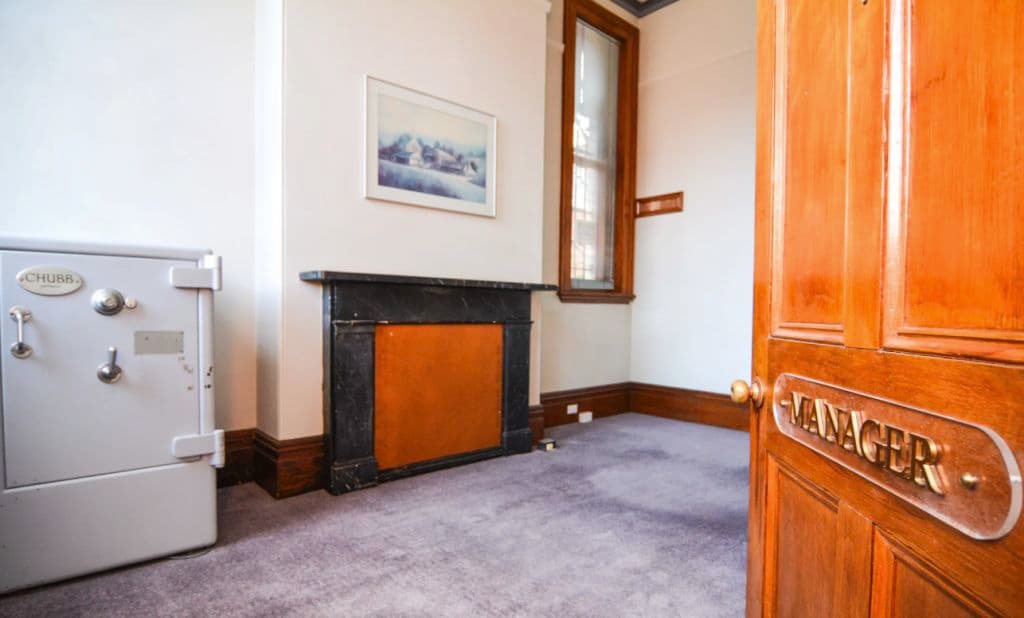
Seeto said the building’s combination of heritage character, CBD location and flexible layout opened the door to a range of adaptive-reuse possibilities.
“You can pretty much do whatever you want with multiple entry and exit points onto Main Street,” Seeto said.
The former banking chamber could potentially be transformed into a hospitality venue, boutique retail space, gallery, wellness centre, medical rooms or professional headquarters, while the upper-level accommodation provides a handy residential component.
The building has also undergone modern upgrades including ducted air conditioning, automatic doors and a security system.
Seeto said the property offers great diversity with unused land offering upside potential.
“It’s on a significant block of land, with great frontage and access, significant rear land development potential, and a carpark a short walk from the train station for easy commuting to Sydney,” he said.
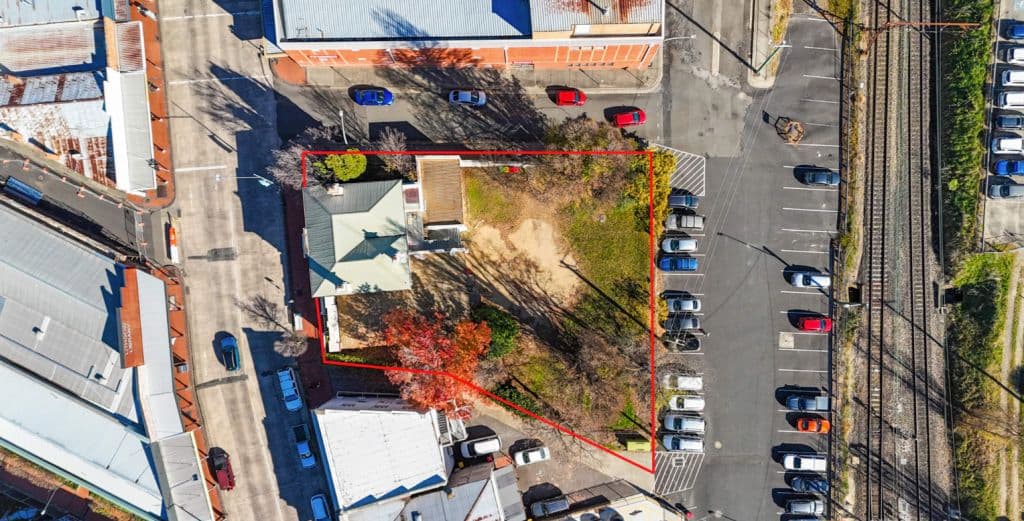
At the rear of the property is a large fenced yard providing off-street parking and potential for landscaping or future expansion, subject to council approval.
The property adjoins a council car park at the rear, while a pedestrian walkway to the east provides direct access to Main Street.
“It’s kind of an island site, because you can access it by the side lane, and also there’s a pedestrian footpath down the side of the building to the rear,” he added.
“The two-bedroom unit is a great value-add opportunity, too.”
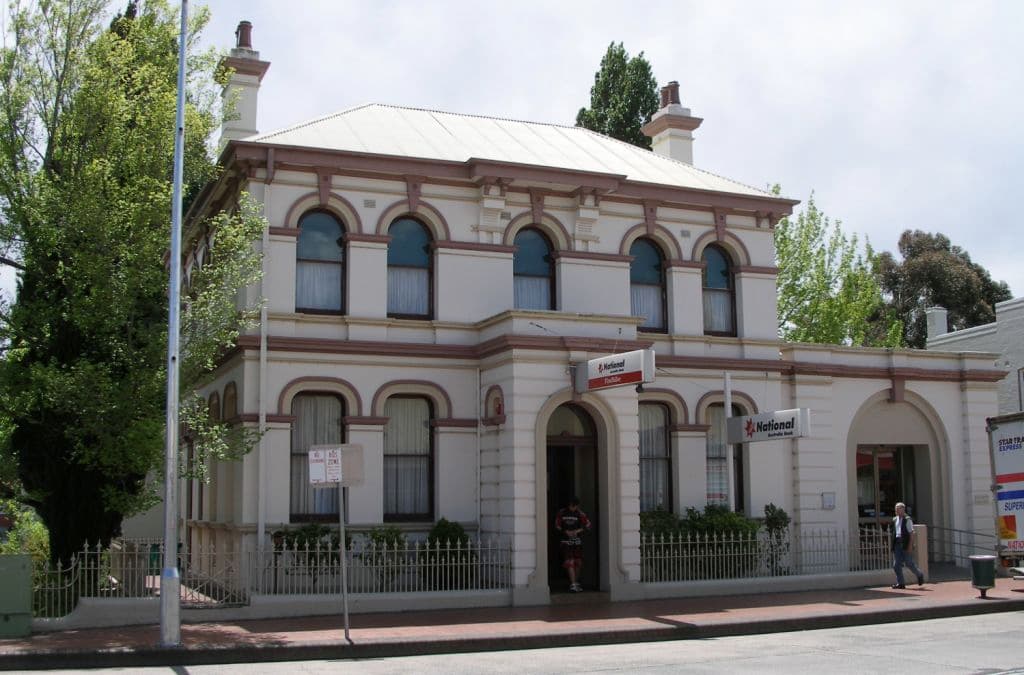
The grand old dame started out as a branch of the Commercial Bank of Sydney, designed in 1883 by the Mansfield Brothers, and signifies “the wealth and optimism of banking institutions in the mid to late Victorian era,” according to its heritage statement. It describes the property as having an “architectural quality uncommon in the commercial centre of Lithgow” and contributing significantly to the town centre’s streetscape.
The streetscape has recently benefited from a $2.3 million upgrade, with improvements to Main Street nearing completion earlier this year, with a further $1.35 million-plus since committed to safety, accessibility and public-space improvements across the town centre.
Lithgow, once a coal mining and steel-making centre, is reinventing itself as a forward-thinking energy producer.
Seeto says Sydneysiders in particular are buying up farmland, lured by some major local work opportunities, including the repurposing of the decommissioned Wallerawang Power Station, and the Lake Lyell Pumped Hydro Project.
“Slowly but surely, the Sydney swell is pushing Lithgow up again,” he said.
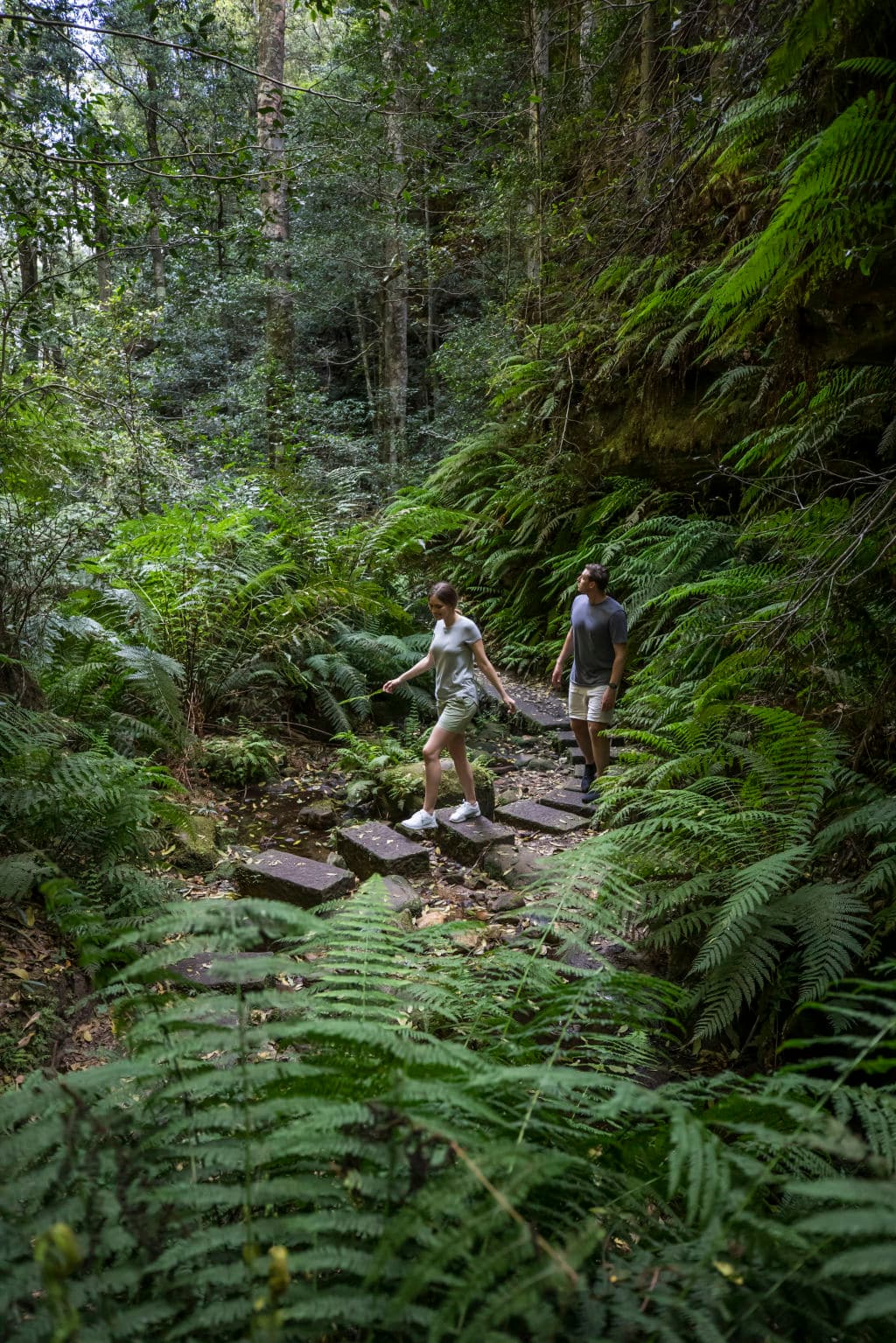
Lithgow was one of the first towns in Australia to industrialise, with a coal mining and steel-making boom in the 1860s. With a history steeped in ironworks, power generation, small arms manufacturing, and rail, it’s also famous for the invention of the Zig Zag railway to cross the Blue Mountains.
The railway was created to overcome the steep gradients of the mountains, an engineering innovation that became world-renowned. Since reopening after years of restoration following bushfire damage and safety concerns, it’s the town’s most famous tourist attraction, with trains running through dramatic sandstone viaducts, tunnels, and forested escarpments.
Visitors are also drawn to the Lithgow Small Arms Factory Museum, a Glow Worm Tunnel, and easy access to the Jenolan Caves in the Blue Mountains.
Lithgow’s European settlement dates back to 1842 when the first land grants were granted for Eskbank Estate, and has now expanded with the convenience of schools, TAFE, a hospital, and a mix of local and national retailers.
It is also known for its annual festivals, such as Ironfest and Lithgow Halloween.