Is non-essential retail still a viable investment?
Essential retail assets have recently been heralded as a defensive backbone of the commercial property market, underpinned by non-discretionary spending and stable income streams – especially in a cost-of-living-constrained environment.
That positioning is reflected in recent transaction data. According to the Knight Frank Australian Retail Review from late 2025, retail property was the most traded asset class in the first half of the year, with $6 billion transacted. The figure points to strong investor appetite for the sector overall, but it was heavily geared towards essential retail.
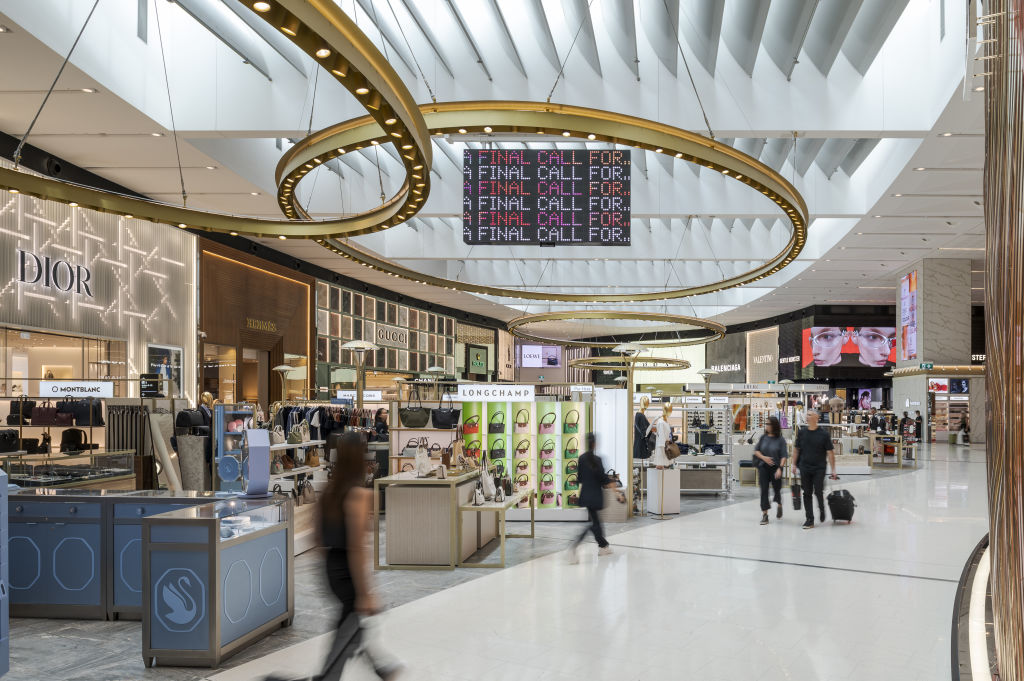
So what about the other end of the spectrum, where retail is more reliant on consumer confidence, foot traffic and lifestyle spending? Given the volatility of household budgets, are non-essential retail assets still a viable investment?
Consumer data offers a mixed answer. According to the Australian Bureau of Statistics (ABS), household spending has remained relatively resilient, rising 4.6 per cent year-on-year. However, discretionary spending has lagged, increasing just 0.1 per cent month-on-month compared to 0.8 per cent for non-discretionary categories.
Richard Jenkins, property advisor and founder of BWP Advisors, says investor appetite for non-essential assets remains but is becoming more discerning.
“Discretionary retail is still attracting capital, but it is far more selective and pricing-sensitive, with a clear bias toward assets demonstrating resilience in foot traffic and spend,” he says.
“It’s both sentiment and pricing. We are seeing yield expansion in secondary discretionary assets, particularly where leasing risk is evident. Prime assets remain relatively well-supported, but the risk premium for non-essential retail is now clearly being priced in.”
On the ground, Phil Reichelt from Tenant Leasing Group says discretionary retail can still be a sound investment – with similar caveats.
“Expansion is still happening, but it is more targeted and portfolio-led,” Reichelt says. “Discretionary retailers are materially more analytical and less ego-driven than they were a few years ago.
“The old mindset of ‘take the best-looking site and back the brand’ has largely been replaced by a sharper focus on occupancy cost, conversion, omni-channel support, catchment quality and downside protection.”
Reichelt adds that retailers are approaching site selection with greater scrutiny.
“Retailers still want strong locations, but they are less willing to carry a weak deal or a prestige address that does not stack up commercially,” he says.
“Better operators are still taking space, but they are being far more disciplined about which stores justify capital and which stores need to be reworked, relocated or exited.”
Reichelt says this is where the discrepancy between primary and secondary assets can make all the difference to investment performance.
“Prime retail conditions have tightened in stronger locations, while weaker secondary locations remain harder to justify,” he says. “Weaker CBD strips and underperforming retail pockets are far less forgiving.”
At the same time, the way people engage with retail is compounding the divergence between primary and secondary assets. Simon Regan, leasing and valuations advisor at GrayJohnson, says physical retail engagement has declined as more of the customer journey shifts online.
“Because a significant amount of the ‘search and discovery’ phase for fashion and homewares now happens online, physical dwell time in-store has reduced,” he says.
At an operator level, Adore Beauty is one brand that has successfully transitioned from purely online to a mix of digital and bricks and mortar. The beauty retailer opened its first shop in Melbourne in early 2025 before expanding to multiple locations over the last 12 months.
Chief executive Sacha Laing says the move into physical retail was a “natural evolution” for the brand and has delivered strong early results. In fact, he says 87 per cent of Adore Beauty’s transactions happen in-store, demonstrating that discretionary spending in a physical location remains significant.
Laing adds that the move has significantly improved customer acquisition efficiency.
“New customer growth increased 21 per cent as our customer acquisition costs more than halved,” he says.
Adore’s physical rollout has also been both highly selective and highly disciplined – an approach that aligns with Jenkins’ and Reichelt’s observations. The group is targeting high-performing stores that meet strict location and performance criteria, specifically in the top 40 high-traffic shopping centres with shops spanning 160 to 180 square metres.
For investors, the implication of increased selectivity is clear. Discretionary retail is no longer a uniform category, and the gap between high-performing, well-located assets and secondary stock keeps widening. This makes asset selection perhaps more important than ever.
Taken together, discretionary retail may be more exposed to shifts in consumer sentiment, but it’s far from uninvestable. Well-executed retail in the right locations continues to perform as long as the underlying fundamentals stack up.
Regan adds that the onus is on retailers to establish a compelling reason for consumers to visit.
“Consumers still want a reason to go out,” he says. “If a retail operator can attract a crowd and create a destination, investors will follow.”