Global economic headwinds and geopolitical uncertainty pose a risk for Australian hotel operators, but most are optimistic about the year ahead after a strong occupancy report card in 2025 showed demand improving.
Managing director of hotel group IHG Australasia and Pacific, Matt Tripolone, said the market was as strong as it has ever been but warned “domestic and macroeconomic factors beyond our control” meant the business needs to stay “nimble and agile” to adjust to changing circumstances.
The Australian hotel sector has broadly recovered from the pandemic, with occupancy up in 2025, despite international visitor numbers remaining below pre-COVID levels, and hoteliers are confident the trend will continue in 2026.
Renewed confidence in business and corporate travel and a range of popular sporting and cultural events have improved demand.
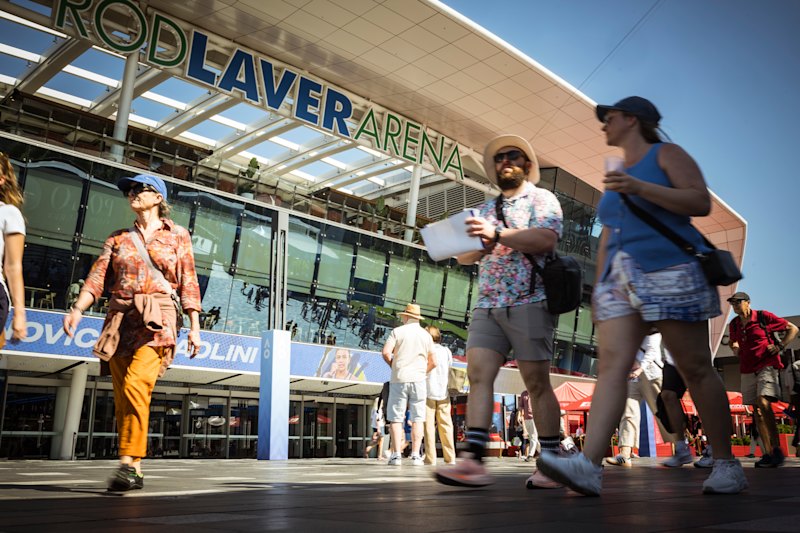
This weekend, the Australian Open kicked off to record crowds, with occupancy in Melbourne hotels up 6 per cent compared to the same time last year, according to Dougal Hollis, the general manager for Victoria at Accommodation Australia.
Chair of Accommodation Australia, David Mansfield, said there is a strong sense that demand will improve through collaboration with governments and other tourism stakeholders, so the sector has a positive outlook for the year ahead.
But geopolitical uncertainty and macroeconomic fluctuations – mostly emanating from the White House – could influence travel patterns, said hotels adviser Dean Dransfield, though that may not be a bad thing for the Australian market, he added.
The global tensions and the fact that the built-up demand for international travel in the pandemic is waning mean domestic travellers might prefer to explore their own country rather than venture overseas, which is good for Australian hotels, Dransfield said.
And while international travellers might be discouraged from leaving their own shores in such uncertain times, if they choose to go anywhere, Australia would be an attractive option.
“I think it improves Australia as a destination in terms of safety and reduced volatility in terms of the exchange rate. With every new tariff variation, there are reasonable fluctuations in currency,” he said.
“We might be winning a prize that’s become diminished, but it means the tendency is more in favour of us than against.”
Australia’s hotel sector is also dominated by domestic corporate travel, Dransfield said, so macroeconomic factors that change their behaviour would flow on to hotels.
The 2025 occupancy report card
Accommodation Australia graded the nation’s accommodation sector an A-minus in its hotel occupancy end-of-year report card, with Perth leading the improvement, followed by Sydney, Hobart and Adelaide, according to chief executive James Goodwin.
“The end-of-year report card shows strong figures across most capital cities,” Goodwin said, “A good mix of international sporting and cultural events, world-class performers and festivals across the year definitely contributed to the results as well as renewed confidence in business events and corporate travel.”
But Brisbane and the Gold Coast were hurt by extreme weather and cyclones in south-east Queensland, down 0.6 per cent and 2.8 per cent respectively.
Improved business confidence helped to increase occupancy due to more demand for mid- to long-term accommodation for construction workforces and the changing demands of remote work.
While traditional business travel has not fully rebounded since the pandemic, the rise in working from home has led to a new trend where teams travel to meet each other in person, Goodwin said.
“This has created almost a new category of people getting together a couple of times a year or once a year for either a strategy day or a team-building day. That’s created a new sense of people coming together, staying one night and utilising the hotel conference facilities as well,” Goodwin said.
Tripolone said the results for IHG hotels broadly reflected the themes in the scorecard.
“Across 2025, our hotels experienced similar occupancy patterns to those seen across Australia’s major capital cities, particularly Sydney, Perth and Brisbane, reflecting demand from a mix of corporate, leisure, events and group travel,” Tripolone said.