Historic Orange church listed for $1.15 million with hospitality DA
A deconsecrated church in central Orange has been listed for sale, with development approval for conversion to a hospitality business.
The former Five Ways Uniting Church officially opened in 1903 and served the Orange community until 2018, when it was sold into private ownership.
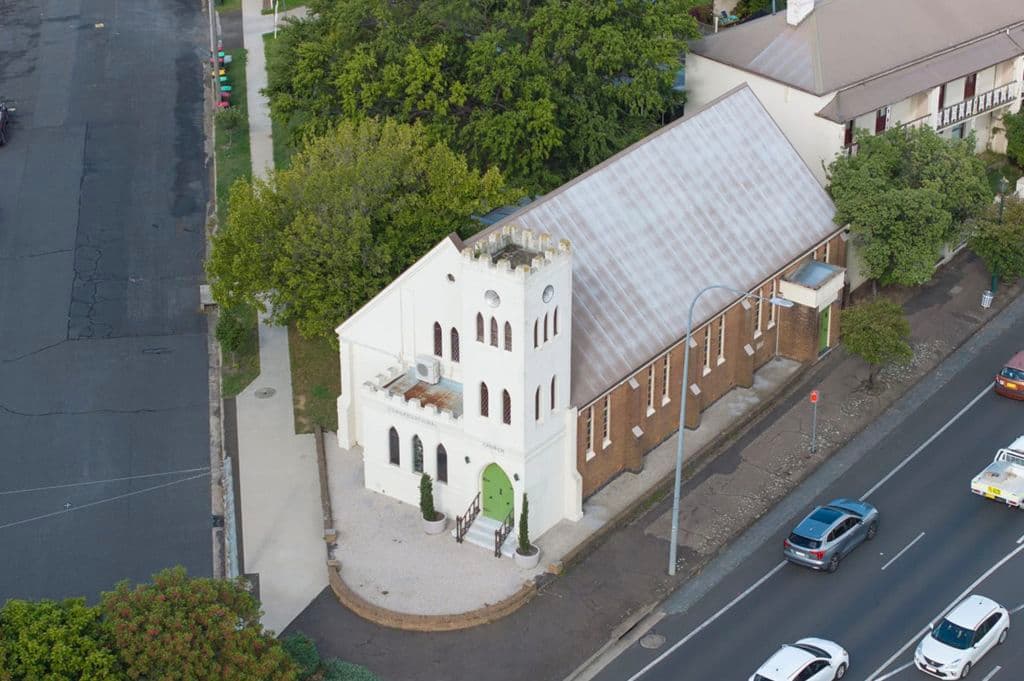
The 289-square-metre building occupies a high-visibility site at the city’s Five Ways intersection, which serves as the primary arterial entrance to the Orange CBD.
It is one of the city’s most recognisable landmarks, and its revival as a commercial enterprise has been the subject of much speculation and local media coverage in recent years.
Existing DA approval for a cafe, wine bar, restaurant or corporate headquarters offers a de-risked transition for an owner-operator or investor, says RWC agent Scott Timbrell.
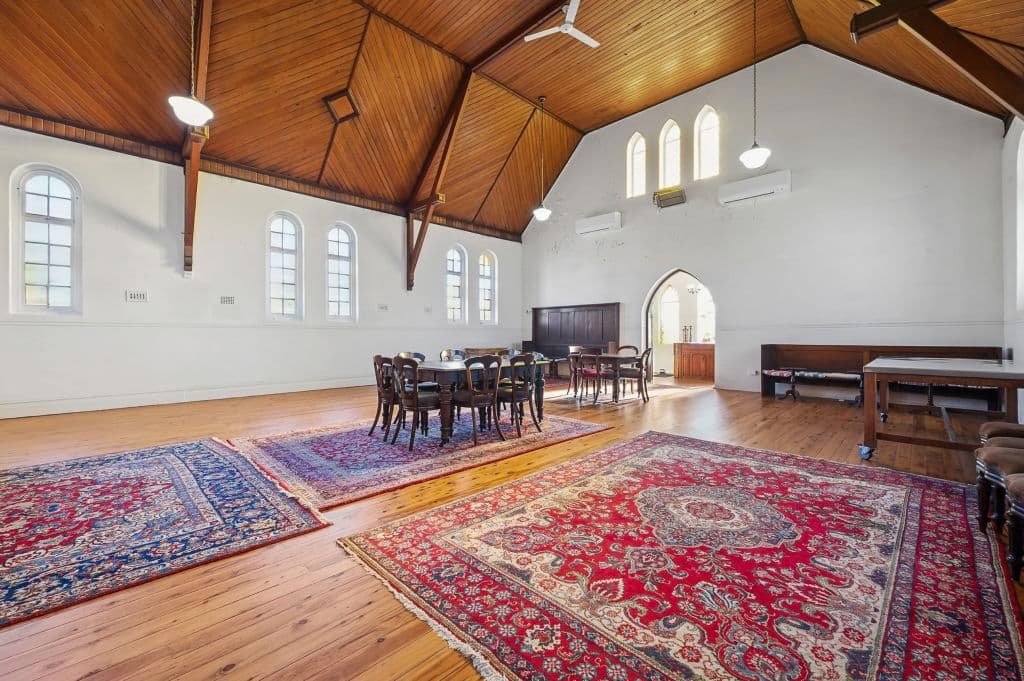
“It is a blank-canvas opportunity made all the more appealing by the church’s history and architecture,” he says.
That architecture – including high-vaulted ceilings, original timberwork and significant Gothic masonry – has been carefully preserved.
Also intact is the equipment in the bell tower that was used to monitor passing planes during World War II, when the church served as a munitions depot.
“The ladders and other equipment are still in place, adding to the sense of history,” Timbrell says. “This really is a building with Orange’s past woven through it.”
The current owner has made a few improvements, installing air-conditioning and adding a long bar with fridges and prep space, but the property is otherwise in original condition.
“The vendor collects churches,” Timbrell laughs. “He has a portfolio of them across the NSW Central West, and now the time has come to sell one or two of them.”
The new owner could capitalise on the church’s high volume of passing traffic and proximity to the city’s primary professional precincts, he adds.
The Central West region boasts a $10.3 billion economy, fuelled by high-end tourism and a recent proliferation of professional businesses.
“This is a region that has grown significantly and is set to keep growing,” Timbrell says.
The approved development application provides flexibility for the new owner, who could leverage the church’s high ceilings to set up an artisanal distillery or use its atmospheric nave to establish a premium wine bar or restaurant.
It could also serve as a trophy asset for a firm seeking a prestigious, high-character base in the Central West, or be reborn as a cooking school, as its original kitchen is still operational.
The church is for sale for $1.15 million, which Timbrell says is negotiable.
He is confident that, once prospective buyers begin to tour the property, it will sell promptly.
“There’s something about the space, once you step inside it, that fills the mind with possibilities,” Timbrell says. “It’s the sort of versatile and atmospheric building that would sell in a heartbeat if it were located in Surry Hills or Fitzroy.
“For a buyer who appreciates the opportunity, it is a savvy acquisition.”