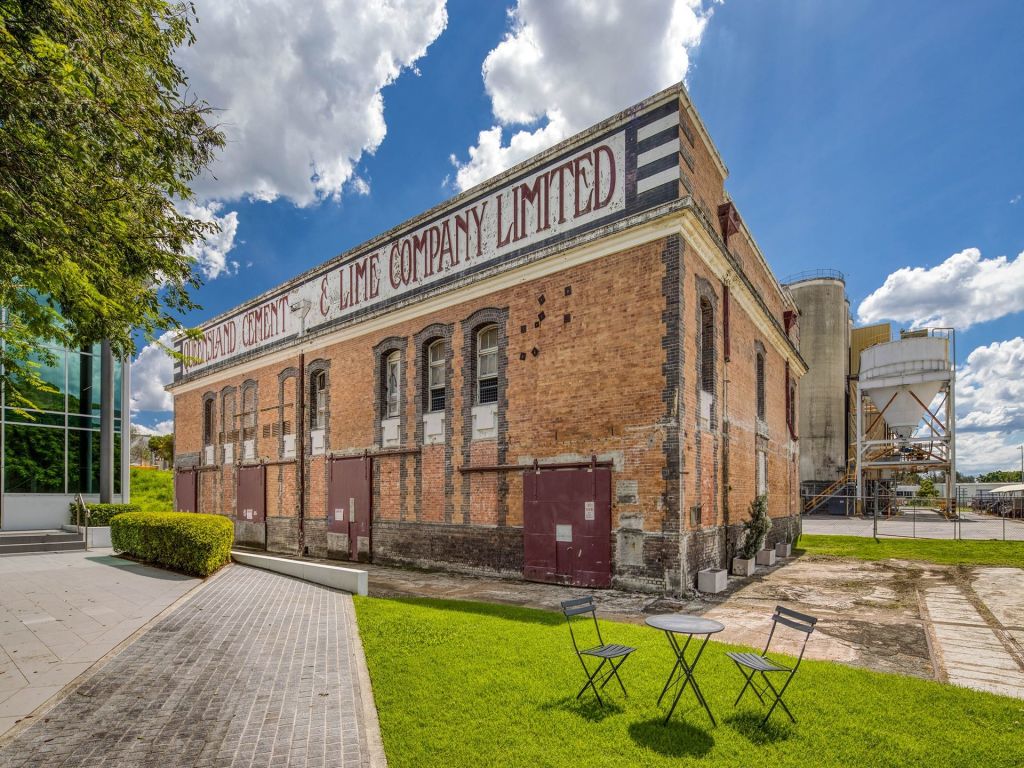
Heritage Queensland Cement and Lime Company factory listed for sale
A former cement factory that “played a major role in the construction industry in Queensland throughout the 20th century” is on the market.
While its mixing days are long gone, the Queensland Cement and Lime Company left a lasting legacy, having provided cement to building projects such as Brisbane City Hall, Queensland Police Headquarters, and the McWhirter’s & Sons Building in Fortitude Valley.
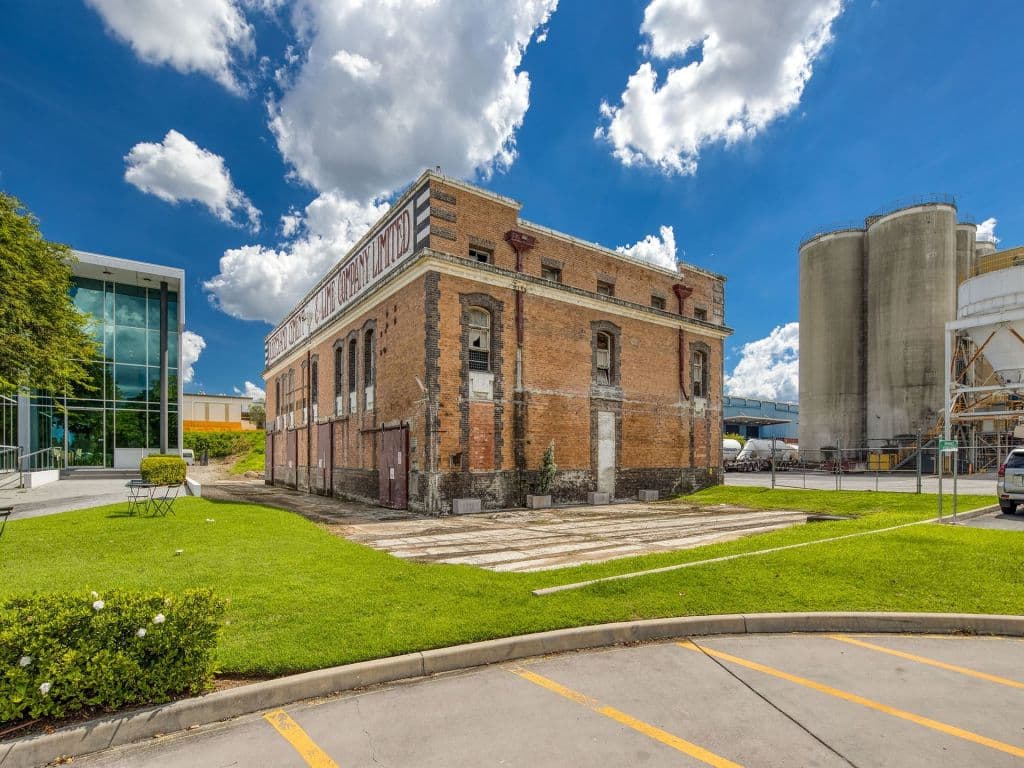
Offered as vacant possession, 16 Station Avenue in Darra, about a 25-minute drive south from Brisbane’s CBD, offers an “incredibly unique development opportunity”, according to listing agent JLL, who did not provide a price range.
With flexible zoning, the former heritage factory, which imported its machinery from Britain, could potentially be transformed into a cafe, retail or another office hub, with a floor area spanning 930 square metres. A possible expansion to 1240 square metres is subject to council approval.
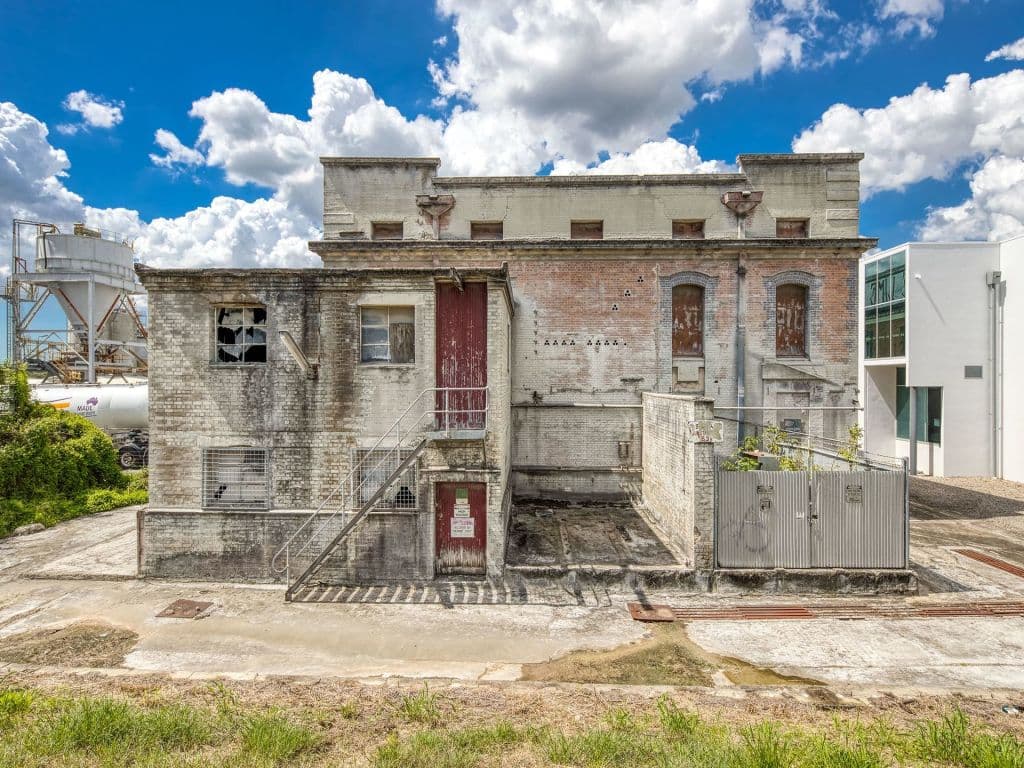
Set to benefit from a “significant white and blue collar employee catchment” thanks to its next door neighbours at the A-grade commercial office space, BTP WestLink Green Business Park, the property also has the potential to capture weekend trade, with the Darra Bowls Club across the road.
There’s the Jindalee DFO, Jindalee Tavern, Monier shopping village, and Sumners Road precinct nearby, as well as the Darra railway station and bus exchange, which are about 200 metres up the road. Access to major arterial roads, the Centenary Highway and the Ipswich Motorway, is a few minutes away.
It is understood that the property has been vacant for some time and will require a new fitout.
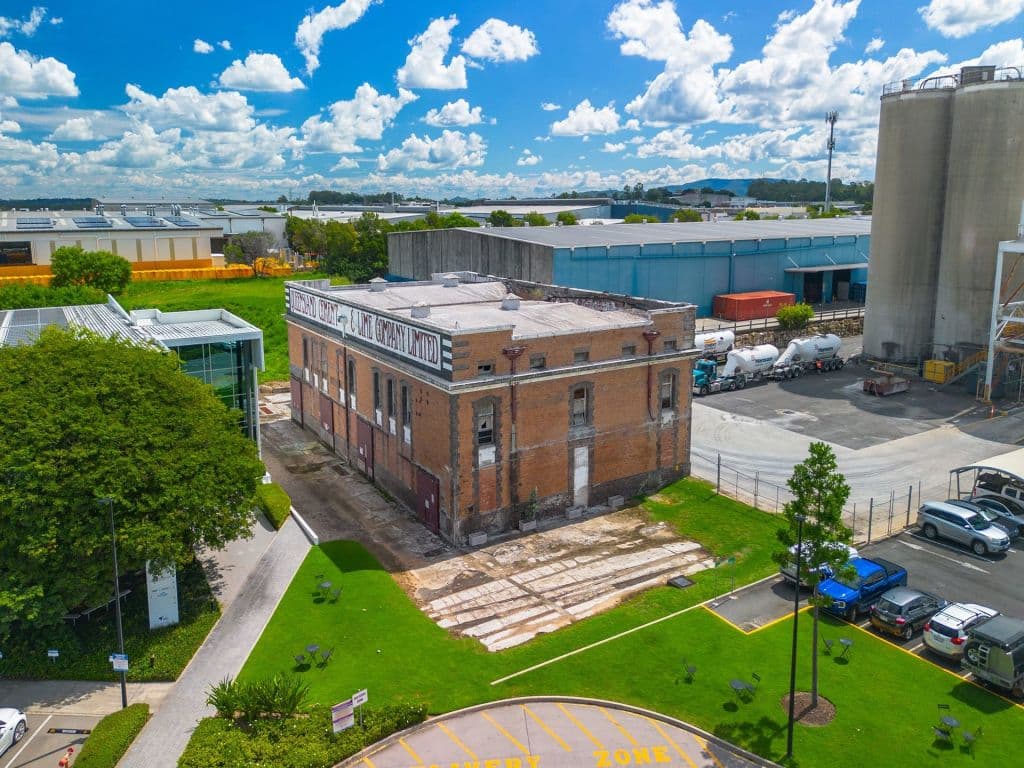
The Queensland Cement and Lime Company, operational from 1917 until 1998, underwent several expansions throughout its history, while also utilising the latest technology, according to Brisbane City’s heritage data.
It also played an important role in the advancement of cement technology, such as when the owners constructed a power plant on the site, which is understood to be a listed property.
Prior to the factory’s output, cement was primarily imported from England, making it expensive and delivery unreliable.
The entire power station was designed in England, shipped to Brisbane, and assembled on site.
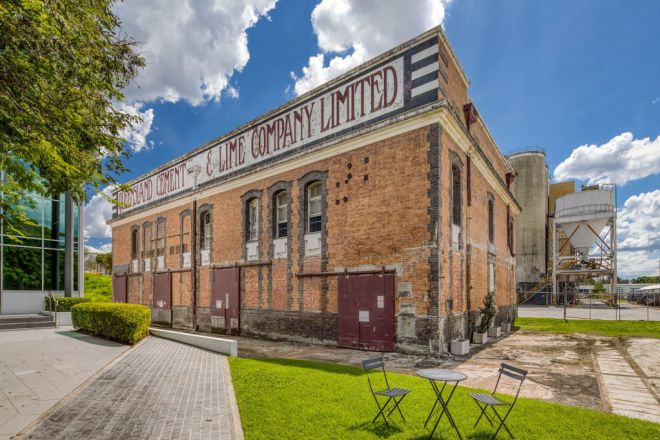
“The Queensland Cement and Lime Company was established in 1914 with the purpose of supplying locally manufactured cement to Queensland,” the city’s Local Heritage Places site reads.
“The company was responsible for providing the cement for many major building works in Queensland and providing consistent employment for many Queenslanders.
“The original brick power-house building remains on the site. The Queensland Cement and Lime Company has played an important role in the history of the State’s development.”
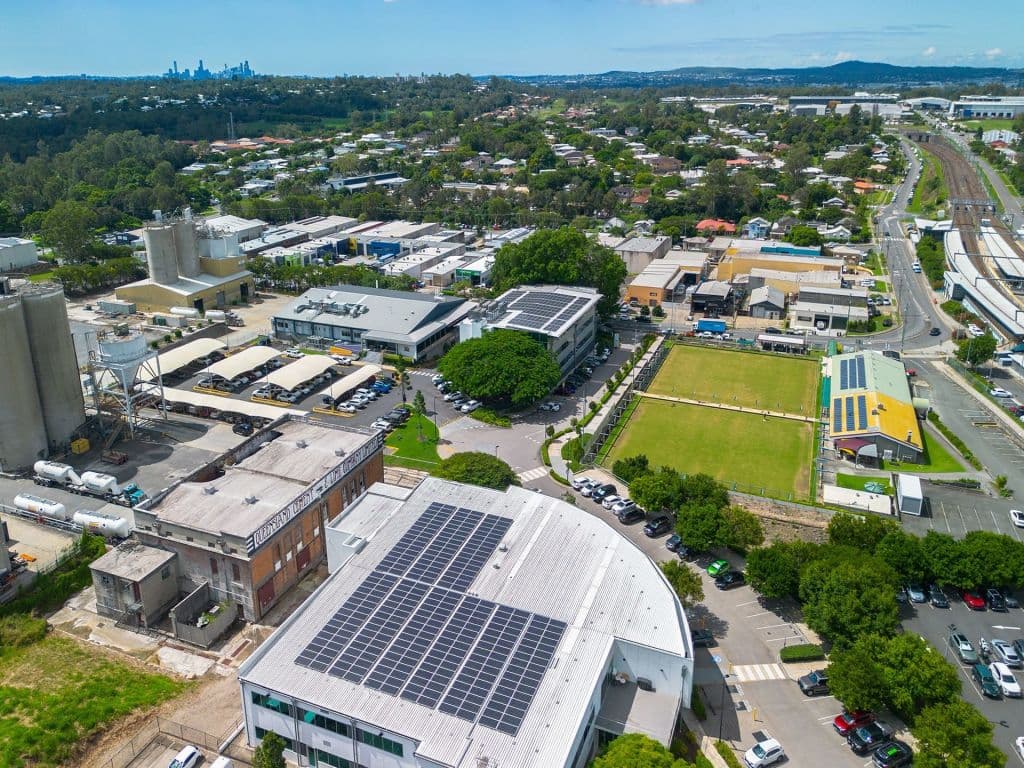
With the outbreak of World War I, the newly established company faced increased building expenses for the plant, and by 1917 was fully operational.
When the factory opened, it contained a single kiln, two cement silos, two triple mixers, raw mill, coal mill, cement mill, brick industrial chimney and an office and laboratory.