From mixed lolly bags to macchiatos: The evolution of Australia’s milk bar
Introduced in the 1930s, Australia’s milk bar was modelled on American soda bars and offered affordable milkshakes, groceries and everyday essentials under one roof.
On suburban corners and along country town high streets, milk bars weren’t just places to buy bread or a bottle of milk; they were where neighbours caught up, and kids spent their pocket money.
Today, the traditional milk bar is becoming a rarity due to changing customer behaviour and higher operational costs. In its place, a new generation of cafes is borrowing the aesthetic, including the signage, checkerboard floor tiles and retro charm, but reshaping the model for 2026.
Still, many Aussies remember the milk bar as a place where one could buy mixed lolly bags weighed behind the counter, icy poles on a summer afternoon, and a crinkled bag of Smith’s chips for an after-school treat.
The milk bar legacy
For much of the 20th century, the milk bar was part of everyday Australian life. It offered convenience long before the concept was commercialised, with milk after hours, bread to complete a Sunday brekkie, and a quick chat with someone who knew your name.
At its peak, thousands operated across the country – about 4000 by 1937.
Greek migrants were behind the concept, merging the American drugstore soda fountain with the Greek tradition of selling milk and yoghurt. For many migrant families, milk bars were a pathway to economic stability and social integration. Many who owned them used the income to pay for relatives to immigrate from Greece and to give their children a good education.
Times are a-changing
The slow decline of the milk bar was driven by the rise of major supermarkets, which have centralised grocery shopping, while petrol stations have absorbed the role of quick, after-hours convenience.
For operators like Melinda Mance, who owns Longford Milk Bar in the Tasmanian midlands, survival has meant evolution, without losing what made the business special in the first place.
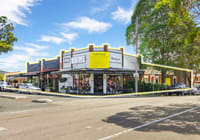
The shop has been operating since the 1950s and is known among locals for its distinctive yellow exterior.
“I call it the little yellow shop – that’s what everyone in town knows it as,” Mance says.
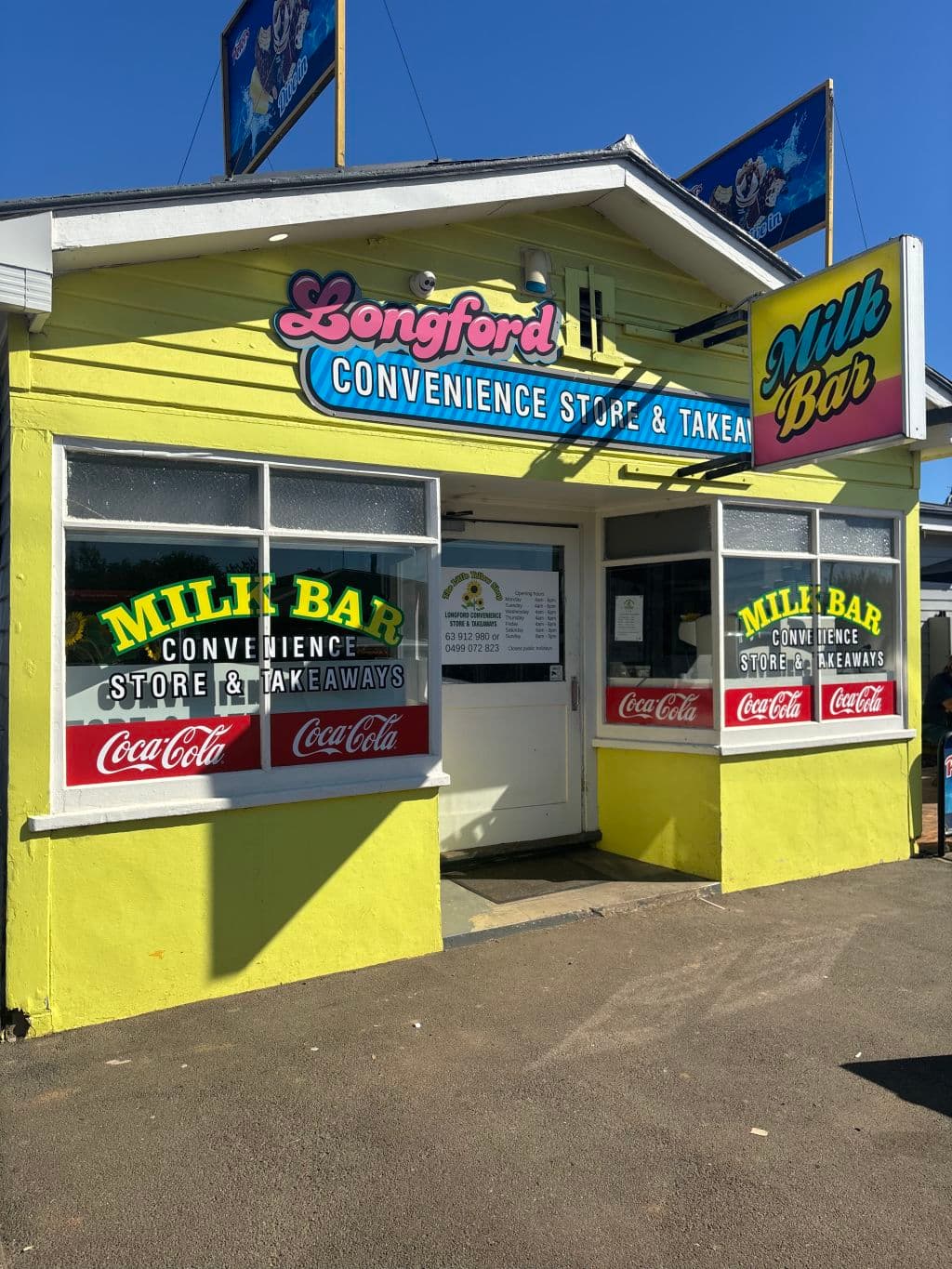
When a previous owner attempted to repaint the store, the response was swift, and the owners changed it back to its original yellow colour.
Mance took over the business with her husband five years ago after the previous owners introduced a food licence – a move that has reshaped its trajectory. Today, the shop processes around 500 transactions a day, with hot food driving much of that demand.
“We’ve kept that identity going – it’s still the little yellow shop, but now it’s also a convenience store and takeaway,” she says.
“Our fish is probably the most popular. We hand-batter and fry it fresh.”
The shift has also meant rethinking the traditional milk-bar model. Much of the grocery offering has been scaled back, replaced with longer-life goods as Mance found she was throwing away too many items.
But the staples of childhood remain, Mance says: “The lolly bags and chips are still there!”
Despite the changes, its role as a Longford community hub endures. Locals still gather, stop for a chat and return out of habit as much as necessity, which serves as a reminder that while the model has evolved, the spirit of the milk bar remains intact.
For Mance, the biggest challenge now isn’t demand but staffing, as she opens early to provide coffee and food to workers at the area’s meat-supply factories. Staffing remains a common pressure point for small operators navigating an increasingly competitive labour market.
The new age of the humble milk bar
While many traditional milk bars have disappeared, their influence is far from gone.
Across Australia’s suburbs, a new wave of operators are reinterpreting the concept. At places like Jerry’s Milkbar in Elwood, the retro identity is part of the appeal, but the cafe offering is for a modern crowd.
“We really wanted to embrace the roots of the original milk bar – it’s something people feel connected to,” says one of the owners, Oliver Gualano
That connection is reflected in the memorabilia from the original milk bar that still lines the walls, from old photographs to vintage signage. The name has been retained as a nod to its past.
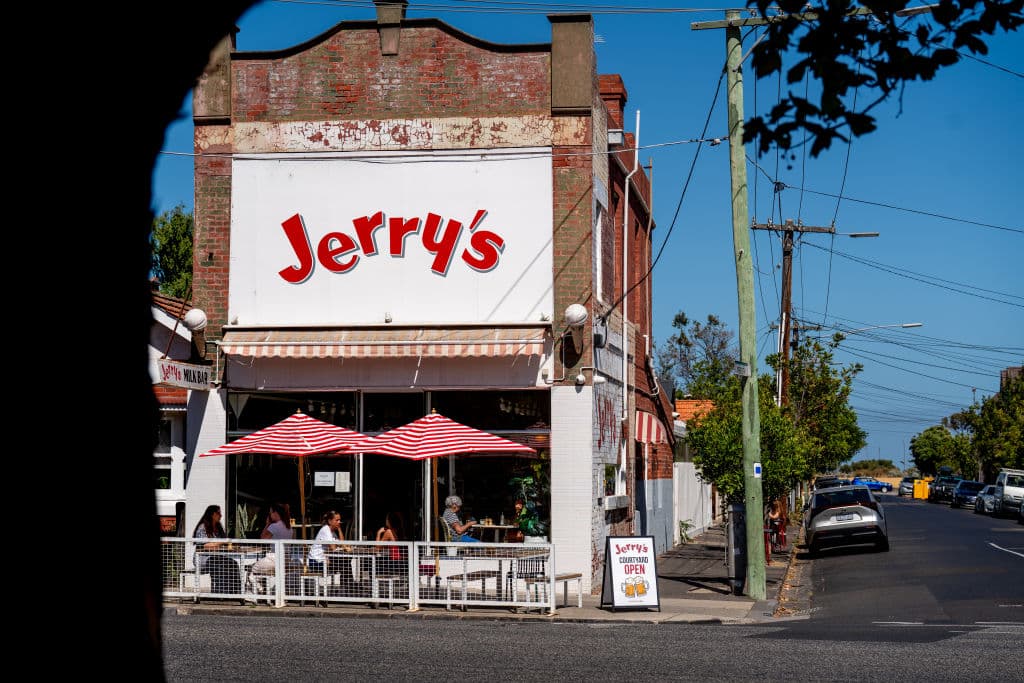
“It’s still a place where people come together – you see locals stopping in, having a chat, it’s that same community feel,” Gualano says.
While the shelves may no longer be stocked with everyday groceries, the role the milk bar once played hasn’t entirely disappeared, but evolved.
“We’ve just adapted it to what people want now: good coffee, food, somewhere to sit and spend time,” Gualano says.
Are they profitable?
A milk bar’s performance as an asset in today’s market is dependent on a range of factors, including location, foot traffic, the operating model and the ability to evolve with changing consumer habits.
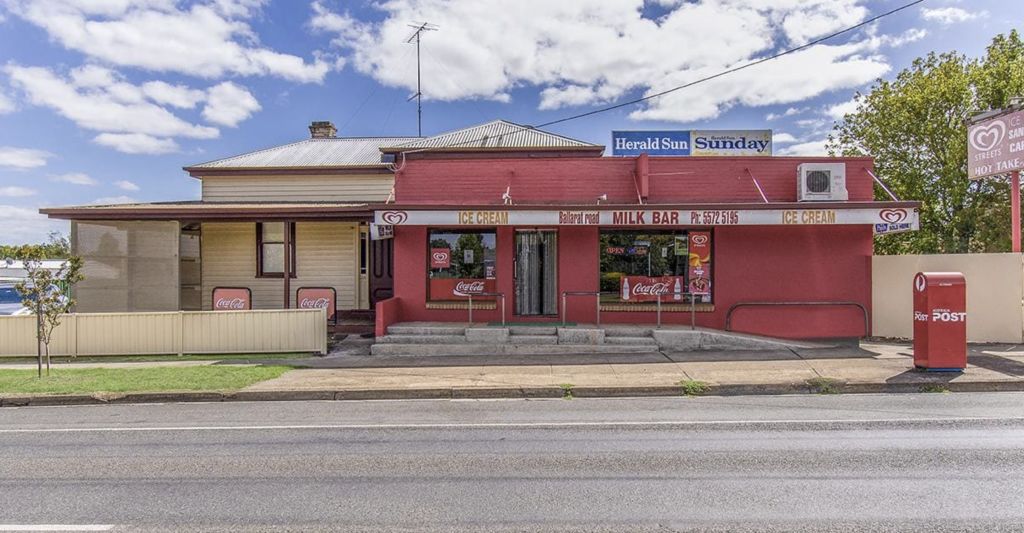
While the milk bars aren’t a common listing on Commercial Real Estate, they still occasionally appear. The $669,000 property at 59 Ballarat Road in Hamilton, Victoria, serves as a strong example.
Buyers could choose to reinstate this classic neighbourhood milk bar or adapt the space for a new business concept.
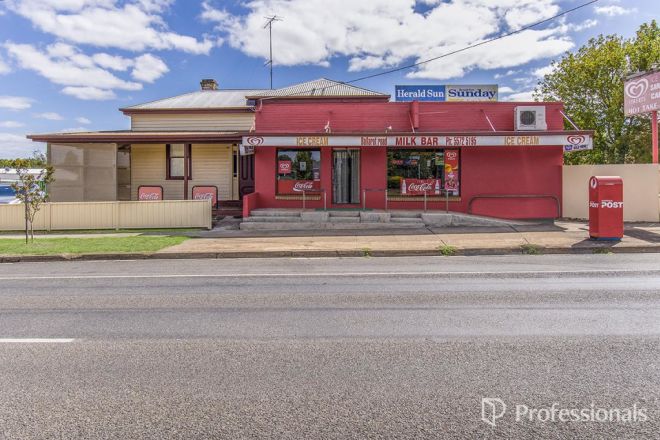
A freehold “highway halt” at 342 Preservation Drive in Sulphur Creek, Tasmania, is another milk bar and convenience store currently listed for $1.2 million.
It combines a takeaway-style milk bar with a two-bedroom residence above, offering investors or owner occupiers the ability to live on-site, or rent out the space and have another stream of income.