How caravan parks transformed from basic to bougie
Back in the day, you’d count yourself lucky if a caravan park had a useable shower block and hot running water.
But many parks have now evolved into luxury experiences, with those in the top tier resembling five-star resorts.
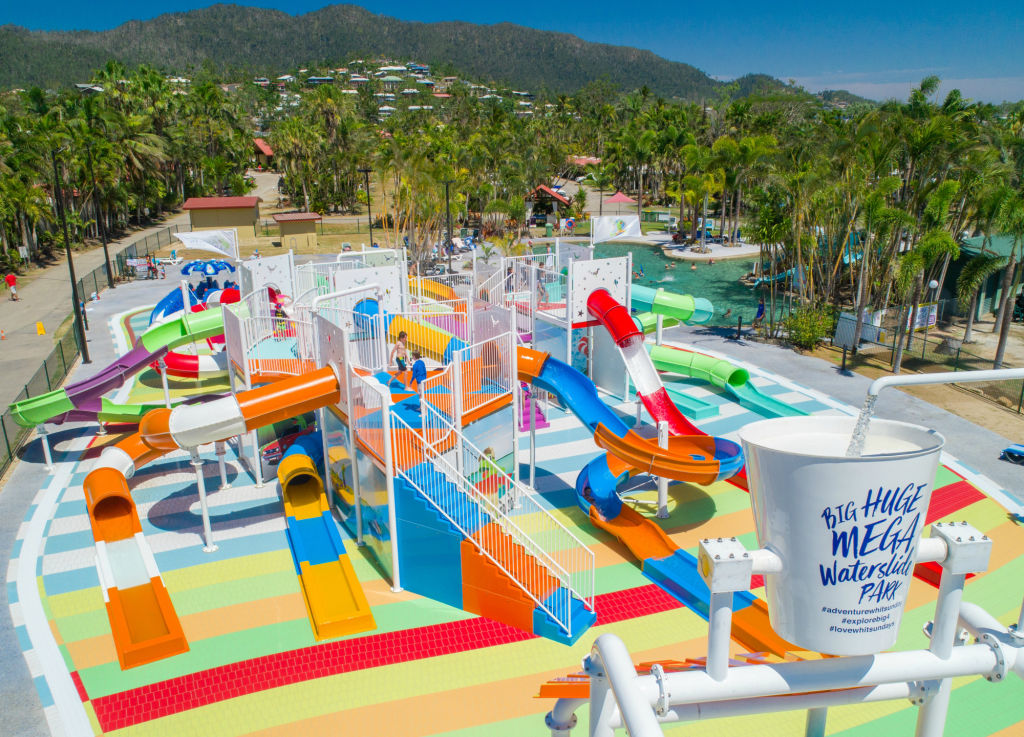
From swim-up pool bars and fine dining to giant waterslides and Kids Clubs (Bear Grylls Survival Academy anyone?), camping has entered its bougie era.
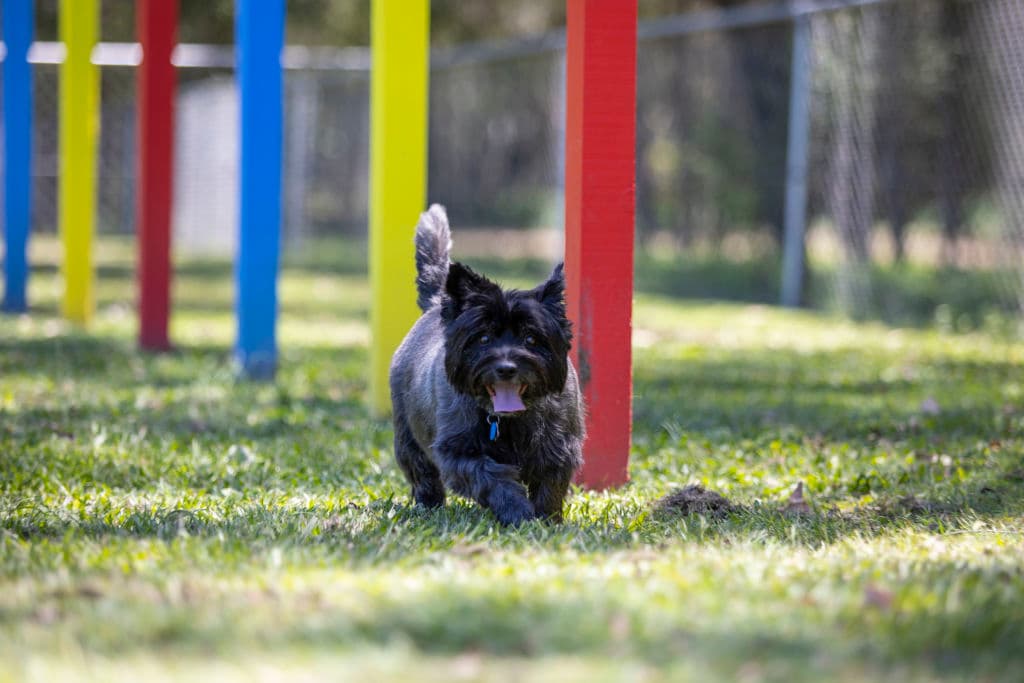
And four-legged friends haven’t been forgotten either, with one Gold Coast park offering luxe doggy day-care facilities where your pooch can relax in air-conditioned comfort while Paw Patrol and Bluey plays on TV.
Park owner Greg McKinnon, from the BIG4 Adventure Whitsunday Resort, and his family have been at the forefront of the caravan park transformation trend.
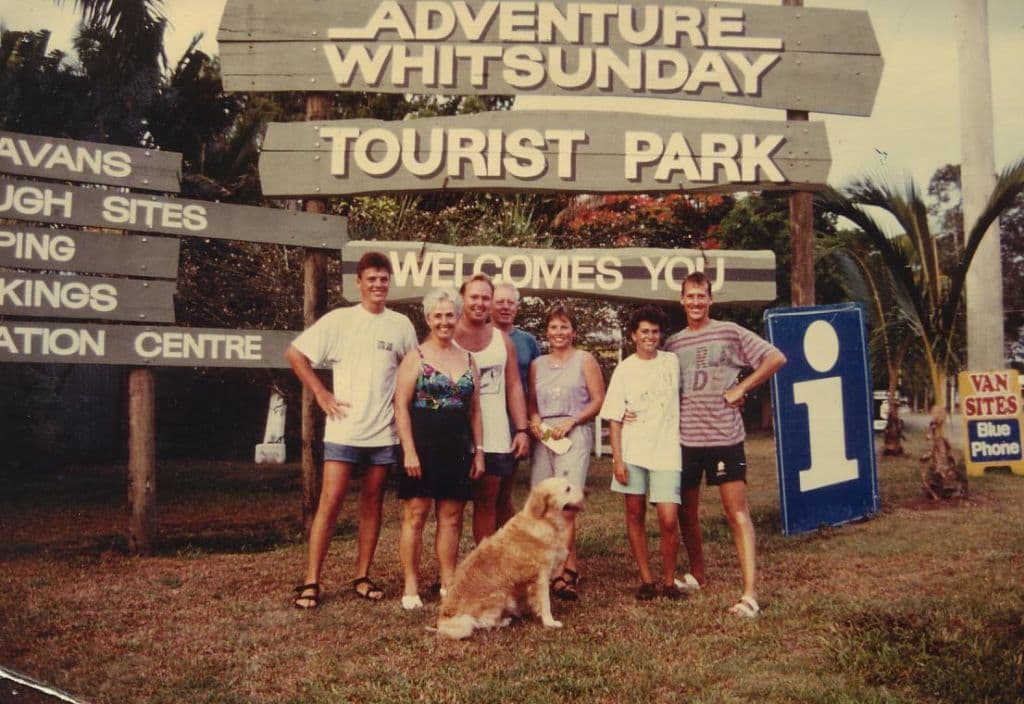
His parents owned a caravan park in Cairns in the 1970s before taking a break from the industry. But the pull to return was strong and, in 1993, the family flew to the Whitsundays after spotting an ad for a caravan park in the newspaper.
The opportunity fell through but the real estate agent suggested another option – a run-down, out-of-town property called Pioneer Park.
“At the time, the park was very basic. It had around 50 powered sites, no cabins, dirt roads, no sewage or drainage infrastructure, and was made up entirely of permanent residents,” McKinnon said.
“But my parents could see what others couldn’t. They saw the land, the space and the potential to create a classic outdoor Australian holiday destination.”
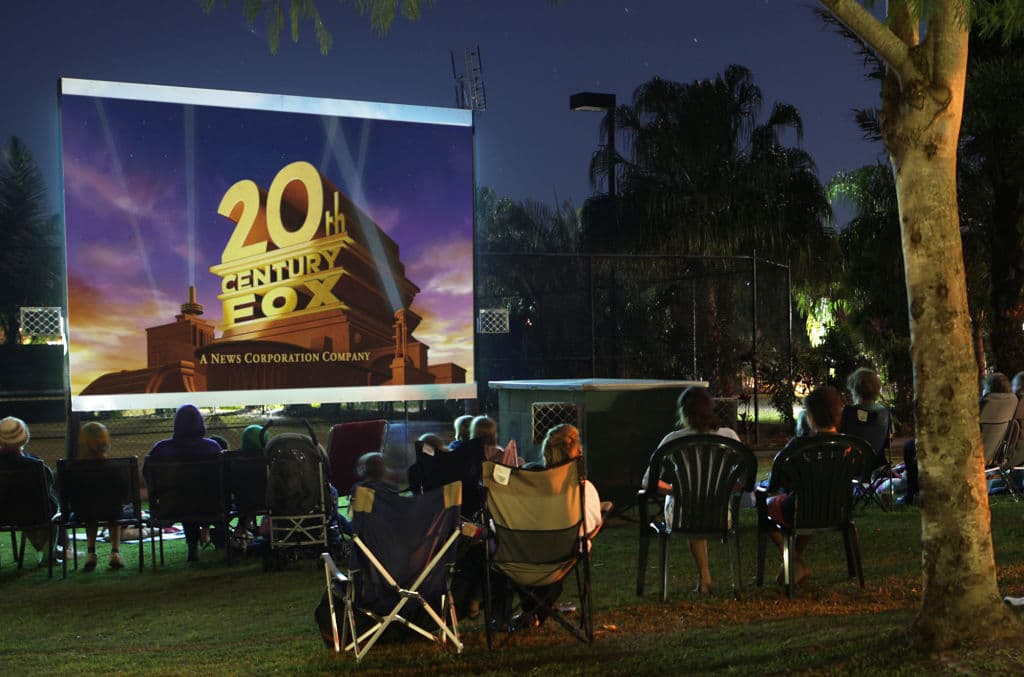
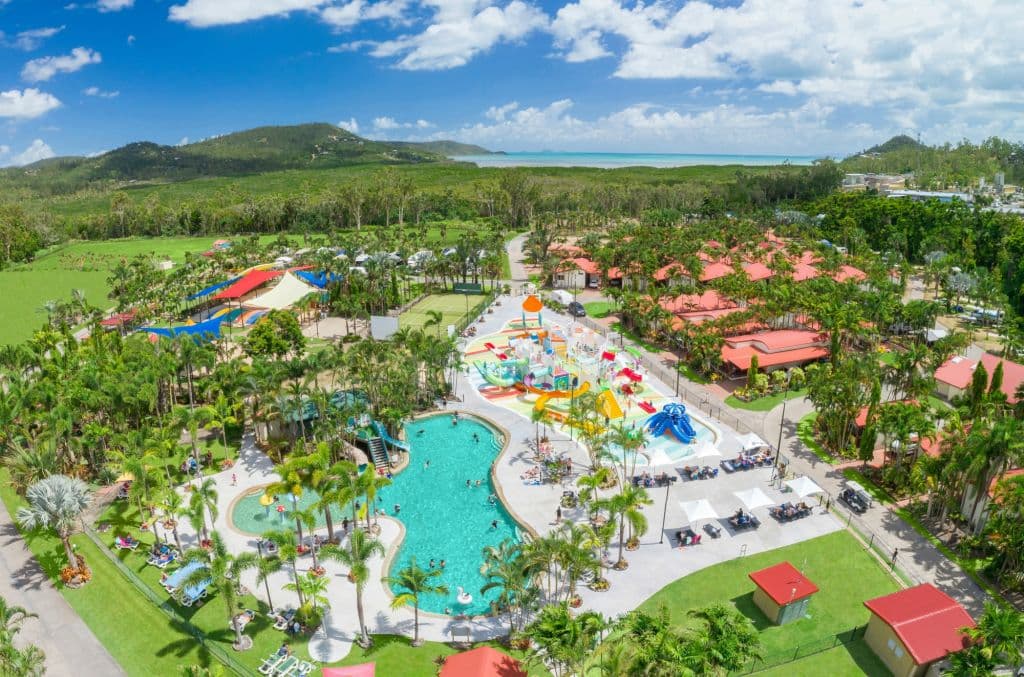
Fast forward more than 30 years and the Whitsunday resort is a multi-award-winning trailblazer featuring Airlie Beach’s largest resort pool, a 13-slide waterpark, mini golf, an outdoor cinema, animal park, tennis courts, playgrounds and a sensory room.
The accommodation offerings now dwarf the previous park and include 90 cabins and 148 sites.
McKinnon says early improvements focused on essential services and accommodation but over time evolved into enhancing guest facilities, landscaping and shared spaces, while continuing to preserve the outdoor feel of a “great Australian holiday park”.
“As guest expectations have changed, so too has the park. We’ve progressively expanded accommodation options and invested in resort-style facilities,’’ said McKinnon.
“What’s remarkable is that the journey is still ongoing…As I often say, I just wish we had another 50 acres.”
BIG4 Holiday Parks CEO Sean Jenner echoes McKinnon and says that traveller expectation has driven the transformation of the previously humble caravan park.
He says BIG4 has seen strong growth with more than 300 parks – all individually owned and operated – in their network, up from 180 parks about four years ago.
“There’s still certainly that cohort that wants the nostalgia and the freedom of your traditional caravan park but they also want the convenience and luxury of a resort as well,’’ said Jenner.
He notes that in the past 20 to 30 years, more corporate players have entered the market, boosting investment in the sector.
An increase in cabin and roof accommodation also provided a higher yield compared to traditional camp sites, increasing asset values and enabling re-investment, he said.

“Parks are a competitive market and they’re looking for that one thing that is going to set them apart … and Instagramable features that are really going to resonate and attract people through online channels,” said Jenner.
“We’ve still got your smaller more basic traditional parks and a lot of guests love those – the greatest things is the breadth, there’s something for everyone based on what holiday experience you’re looking for.”
Janelle Boyd, general manager customer, marketing and sales from NRMA Parks and Resorts, says the past five years has seen parks evolve further following the COVID-19 pandemic and the rise of the digital nomads.
Caravan parks now need decent Wi-Fi so people can work anywhere alongside great facilities and experiences.
“We’re a member-based organisation and we’re constantly looking at what our members are saying and what they’re looking for,” said Boyd.
“They’ve been seeking experiences as a way to connect in the outdoors and facilities and amenities – their lives have evolved.”
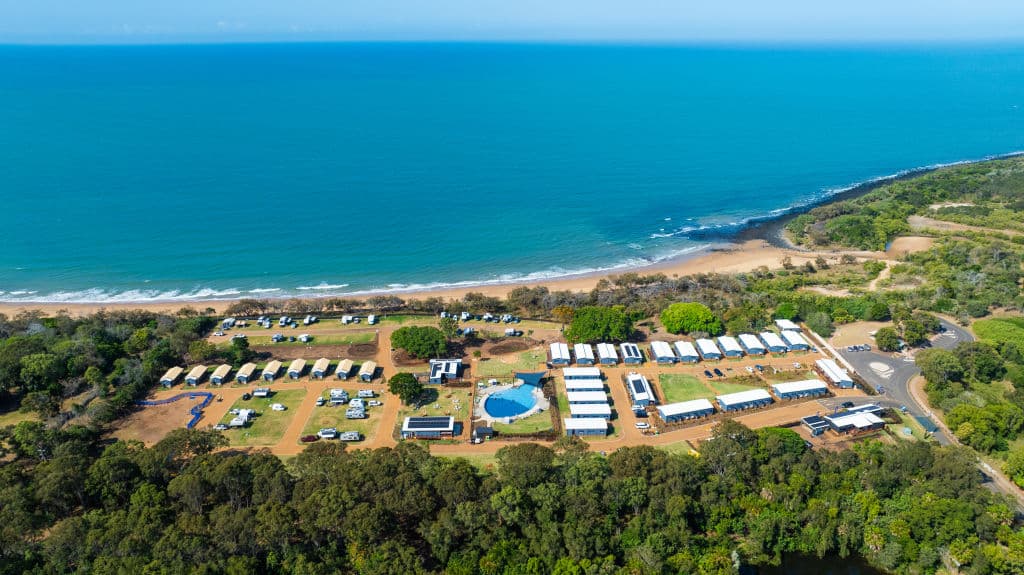
When it comes to unique experiences, the aptly named Turtle Sands park, located in the dunes behind a globally significant turtle-nesting beach near Bundaberg, is hard to beat. It offers a turtle see and stay experience with nightly tours during nesting and hatching periods from November to March.
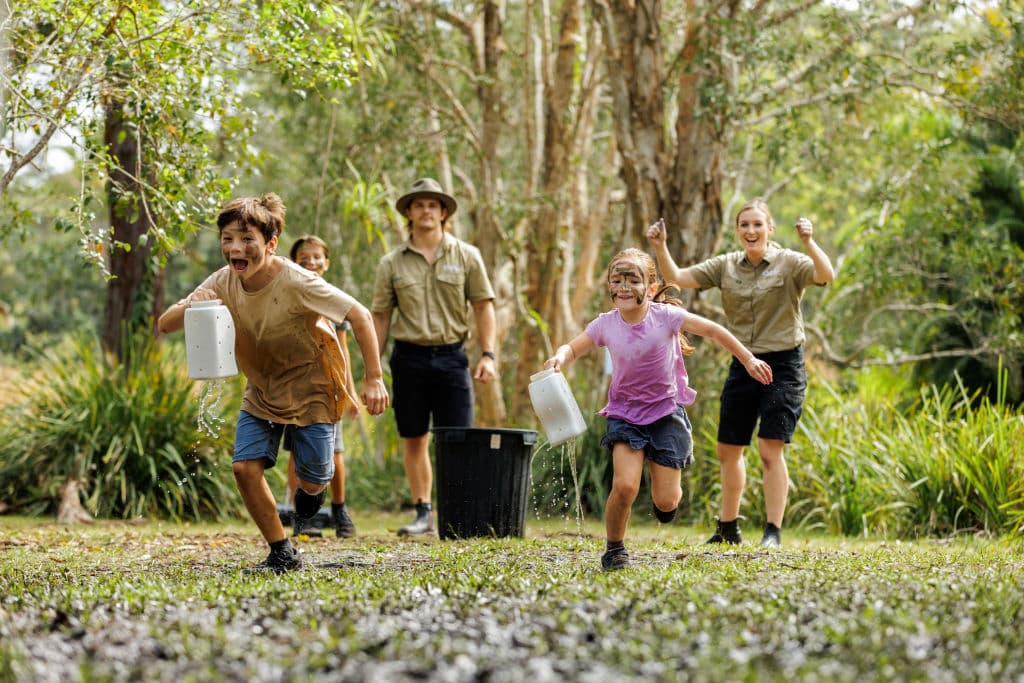
At other NRMA parks, there has been a push towards kids activities such as a Bear Grylls Survival Academy at locations including Ocean Beach on the NSW Central Coast.
“Parents get to relax while their kids get this incredible outdoor education,” said Boyd.
“I think the industry has evolved. I would think when you’ve got some bigger operators and mutuals – we have 3.2 million members – you do have to be keeping up with what people’s expectations are.
“We’re always looking for new locations – for members looking to go to multiple parks on a road trip. It’s really about that experience economy.”
Glamping has become another drawcard in recent years, combining luxury accommodation with the same timeless outdoor experience.
And it’s not just the big operators driving innovation.
Former outback pilot Matt Harnetty bought the Scamander Sanctuary Holiday Park on the east coast of Tasmania about two and a half years ago after spotting it for sale on commercialrealestate.com.au
“In the outback, I stayed in a lot of glamping places and always thought how cool and unique they were, I’d love to do this myself,” said Harnetty.
“It (the park) sort of popped up in the right location and it ticked a lot of boxes, it wouldn’t have mattered where it was, it just happened to be in Tasmania.”
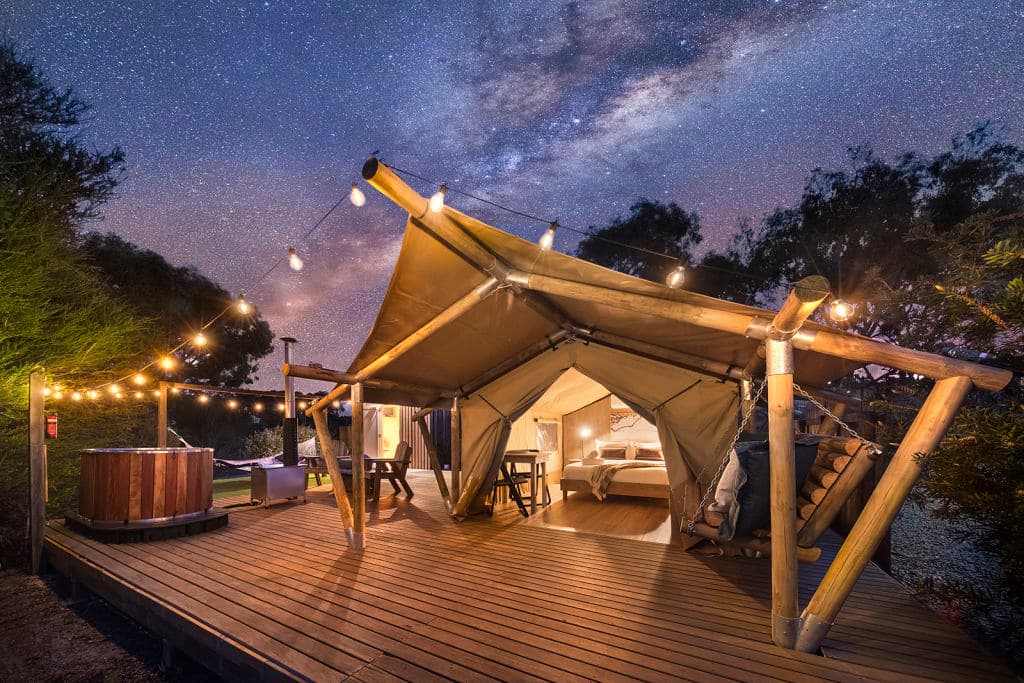
The property had just over 50 powered and unpowered caravan sites and came with 20 glamping tents but Harnetty has since elevated the experience with wood-fired hot tubs and building a sauna and ice bath.
“It’s that additional experience, it sets you apart. People really enjoy it and they’ll pay that little bit extra to have that experience around the natural environment we have here,” Harnetty said.
“It’s a huge industry, it’s something that’s growing, we started to get people say, you put a sauna there and that’s why we’re coming to stay, even if it’s only for a night.”