Amazon will get its giant warehouse, two years later than planned

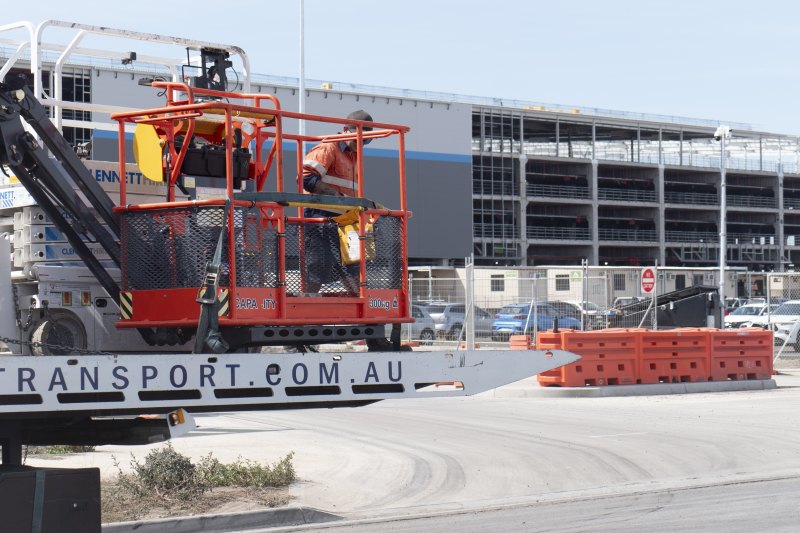
Retail giant Amazon will complete its biggest warehouse in the southern hemisphere in mid-2027, two years later than initially planned, after work on its Craigieburn fulfilment centre on Melbourne’s northern outskirts was thrown into disarray by the collapse of contractor Roberts Co.
Amazon and developer ESR have finalised an agreement with contractor Multiplex to take over the four-level, 209,000-square-metre building, which is now 65 per cent complete.
“Amazon is working closely with our construction partners to ensure the successful completion of our world-leading robotics fulfilment centre in Craigieburn,” a spokesperson for the ecommerce company said.
“Our teams, and our construction partners, are working tirelessly to deliver this project, which will provide high-quality jobs to Victorians, and will enhance the experience for Amazon customers around the country.”
Under Multiplex, the Amazon warehouse project will have a workforce of up to 290 people a day, 245 of whom will be Multiplex employees, sources told the Financial Review.
ESR declined to comment publicly. Multiplex declined to comment.
Construction of the fulfilment centre started in August 2023 with completion originally targeted for 2025.
Multiplex has already been on site at Craigieburn Logistics Estate, 40 kilometres north of the Melbourne CBD, since June under an interim agreement to keep the working teams of subcontractors and contractors engaged with the project.
The robot-operated fulfilment centre, planned to be 9000 square metres larger than the company’s existing robotic centre in western Sydney which was completed in 2022, has become a victim – and the symbol – of Australia’s struggling construction sector.
Number of construction failures rising
Roberts Co was one of the highest-profile contractor collapses in 2025, a financial year in which construction-industry insolvency appointments surged 21 per cent to 3596, from 2977 in the 2024 financial year.
The industry is not yet out of the woods. The latest figures from the corporate regulator ASIC show the number of construction failures is still rising, with 1919 insolvency appointments for the financial year to end-November, up 22 per cent on the same period a year earlier.
Costs for builders and their clients are likely to stay elevated in 2026, consultancy RLB said last week.
“We are seeing construction costs being pushed higher by the skilled labour shortages, low productivity, insolvency risks and an elevated near-term construction pipeline,” RLB Oceania research and development director Oliver Nichols said.
“Limited competition among Tier 1 contractors and subcontractors is also contributing to cost escalation and procurement challenges.”
The Amazon site is massive. At one point in 2024 it had seven tower cranes, the single largest number at any project in the country, and the hurried removal by subcontractors of their equipment from the construction site in March, which the Financial Review first reported, indicated the imminent collapse of Roberts Co’s Victorian business.
Unlike other Victorian projects that NSW-based Roberts Co acquired after the failure of contractor Probuild in 2022 to establish a foothold in the southern state, the Amazon project was one that Roberts Co bid for and won.
Undisclosed differences between builder and client were part of the reason for Roberts Co’s troubles at the site and in a subsequent interview former owner Andrew Roberts blamed the clients’ lack of willingness to share the burden of sharply rising costs.
“You rely on the reasonableness of the clients to effectively administer those contracts in a fair and reasonable way,” Roberts told the Financial Review in October.
“And if that doesn’t happen, if clients are ruthless in their interpretation of contract provisions or their administration generally, that can be really calamitous to the contractors.”
ESR did not respond to a request for comment at the time.